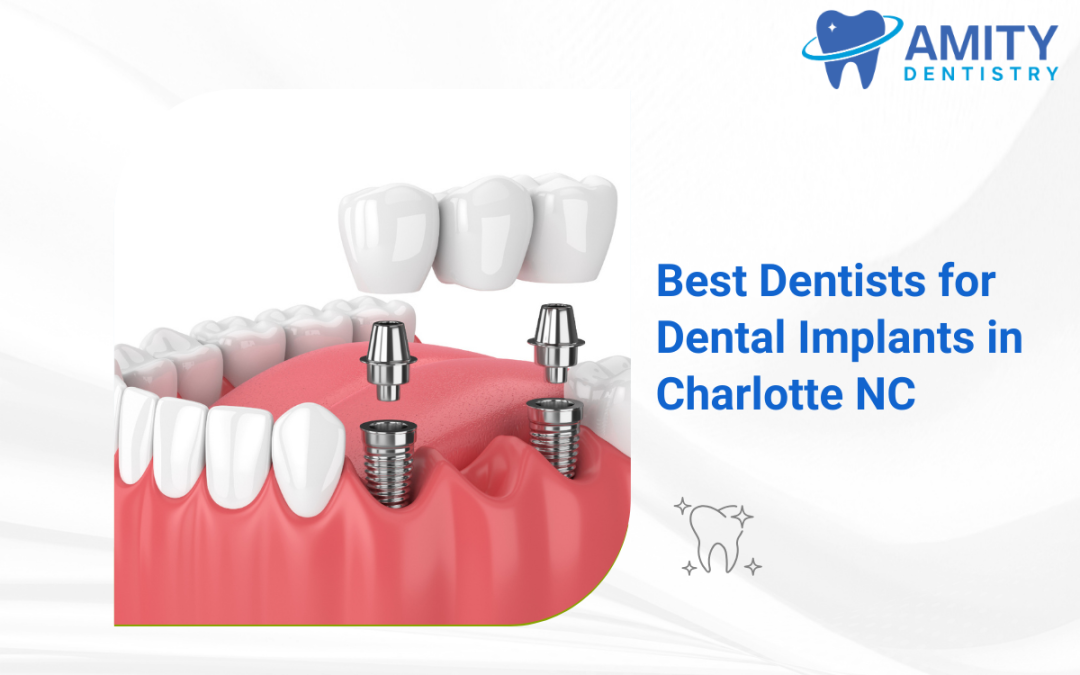
Best Dentists for Dental Implants in Charlotte NC, represent the standard of care for tooth replacement in modern dentistry. The procedure involves the surgical insertion of a biocompatible post into the maxillary or mandibular bone. This post serves as a prosthetic root. Successful integration of the implant requires a biological process known as osseointegration. Bone cells migrate to the surface of the implant and form a direct structural and functional connection. Patients seeking these services in North Carolina frequently evaluate several providers to find the best dentists for best dental implants in Charlotte NC. Clinical success depends on the density of the recipient bone and the precision of the implant placement.
How Dentists Perform Dental Implants?
Dentists use three dimensional cone beam computed tomography to visualize the anatomical structures of the jaw before surgery. This imaging allows for the identification of the inferior alveolar nerve and the maxillary sinus. Avoiding these structures remains a mandatory requirement for a safe procedure. Practitioners in the Charlotte area utilize these diagnostic tools to map the surgical site with millimeter precision.
The placement of a dental implant follows a strict surgical protocol to ensure primary stability. Primary stability refers to the mechanical tightness of the implant immediately after insertion. This stability prevents micro-movements that would otherwise inhibit the formation of new bone. The dental market in Charlotte offers a range of specialists who focus on these complex surgical and restorative tasks.
Biological Requirements for Successful Osseointegration
The biological success of an implant hinges on the body’s ability to accept a foreign object. Osseointegration occurs at the molecular level where the titanium oxide layer of the implant interacts with bone minerals. Osteoblasts, the cells responsible for bone formation, deposit new bone matrices directly onto the implant surface. This process creates a rigid bond that allows the implant to support the mechanical loads of mastication.
Patients must possess sufficient bone volume to house the implant. When bone volume is inadequate, the success rate decreases. Providers who rank among the best dentists for dental implants in Charlotte NC often perform detailed bone density assessments during the planning phase.
Factors such as systemic health and blood flow to the surgical site influence the speed and quality of healing. The inflammatory response immediately following surgery triggers the recruitment of stem cells to the area. These cells differentiate into bone forming cells. A stable environment without bacterial interference promotes the maturation of the bone-implant interface. The healing period allows the bone to harden around the threads of the implant post.
Amity Dentistry > Dentist in Charlotte
Amity Dentistry provides a collaborative model for patients requiring tooth replacement. This practice focuses on the restorative phase of the treatment. The process begins with a comprehensive oral examination conducted by Dr. Aarti Shrestha. Dr. Shrestha manages the overall treatment plan and coordinates with surgical specialists. Dentist in Charlotte at Amity Dentistry analyze the occlusion and the health of the surrounding gingival tissue. They work with local oral surgeons who perform the surgical placement of the implant post. This division of labor allows each clinician to focus on their specific area of expertise. The surgeon handles the osteotomy and bone grafting.
Amity Dentistry then designs and attaches the final prosthetic crown. This approach ensures that the functional and aesthetic requirements of the patient meet high standards of precision. For residents looking for the best dentists for dental implants in charlotte NC, this coordinated care model offers a streamlined path to restoration.
The team at Amity Dentistry emphasizes the long term health of the supporting tissues. They ensure that the final crown fits perfectly within the patient’s bite to prevent excessive stress on the implant. This attention to mechanical detail reduces the risk of prosthetic failure.
Charlotte Dental Implant Center
Charlotte Dental Implant Center is another prominent provider in the region. Dr. Rush Sunar leads the clinical team at this facility. The center emphasizes a specialized approach to implantology. They utilize modern diagnostic equipment to create digital impressions of the mouth. These impressions replace the traditional putty molds that many patients find uncomfortable. Digital workflows allow for the creation of surgical guides. A surgical guide is a custom template that fits over the teeth or gums during surgery. It contains holes that dictate the exact angle and depth for the implant drills.
This technology reduces the margin of error and results in shorter surgery times. Many consider this facility one of the best dentists for implants in Charlotte, NC due to its focus on technological integration. The use of guided surgery allows the clinician to place the implant in the exact location planned on the computer. This precision is particularly important in cases with limited bone or proximity to vital nerves. Digital planning also allows the dentist to visualize the final tooth position before the surgery begins.
Harrell Dental Implant Center
Harrell Dental Implant Center has operated in the Charlotte area for twenty five years. Dr. Robert Harrell oversees the practice and maintains an in-house dental laboratory. Having an on-site lab allows the clinical team to control the fabrication of the prosthetic teeth. Technicians adjust the shade and contour of the crowns in real time while the patient remains in the office. This capability eliminates the need to ship restorations back and forth to external labs.
The practice offers various solutions including single tooth replacements and full arch restorations. Full arch restorations, often called All on 4, involve placing four to six implants to support a complete set of upper or lower teeth. This center is frequently cited when patients search for the best dentists for dental implants in Charlotte NC.
The immediate feedback between the dentist and the lab technician ensures a high level of accuracy. Customizing the restoration on-site allows for better color matching and faster turnaround times. Patients who require complex restorations benefit from this integrated approach.
Mechanical Stability and the Healing Timeline
Osseointegration is the most critical phase of the implant timeline. It typically lasts between three and six months. During this period, the patient must avoid placing excessive force on the healing implant. High mechanical stress can disrupt the formation of bone cells and lead to implant failure. Once the bone has matured around the post, the dentist attaches an abutment. The abutment is a connector piece that protrudes through the gum line. It serves as the base for the final crown.
Some procedures allow for the placement of a temporary crown on the same day as the surgery. This is known as immediate loading. While convenient, immediate loading requires specific conditions, such as high primary stability of the implant in the bone. The best dentists for dental implants in Charlotte NC evaluate each case to determine if immediate loading is appropriate. Secondary stability develops as the bone grows into the implant surface. This biological stability eventually replaces the initial mechanical stability.
Maintenance Protocols for Long Term Success
The best dentists for dental implants in Charlotte NC prioritize patient education and long term maintenance. An implant behaves differently than a natural tooth. It lacks a periodontal ligament, which means it does not have the same sensory feedback as a natural root. Patients must maintain a strict oral hygiene regimen to prevent peri-implantitis. Peri-implantitis is an inflammatory condition that affects the tissues around the implant. It is caused by the accumulation of bacteria and can lead to bone loss and eventual loss of the implant.
Regular professional cleanings and the use of specialized flossing tools are necessary components of aftercare. Clinical staff provide instructions on how to clean around the abutment and under the prosthetic teeth. Consistent monitoring allows the dentist to detect early signs of inflammation. If caught early, peri-implantitis can be managed through specialized cleaning techniques and antibiotic therapy.
Economic Factors and Treatment Planning
Cost remains a factor for many individuals. The total price of an implant involves the surgical fee, the cost of the abutment, and the price of the crown. Additional procedures like sinus lifts or extractions increase the final amount. Most dental insurance plans provide limited coverage for implants, though some may cover the restorative portion.
Financing options are common in the Charlotte market to make the procedure more accessible. Patients should request a detailed breakdown of costs during their initial consultation. Many of the best dentists for implants in Charlotte, NC provide clear estimates that include all stages of the treatment. This transparency allows patients to plan their finances accordingly. Investing in a dental implant provides a long term solution that avoids the recurring costs associated with bridges or dentures.
Diagnostics and Success
The evolution of dental technology continues to improve the patient experience. New software allows for virtual reality planning of the surgery. Dentists simulate the entire procedure on a computer before making a single incision. This level of preparation reduces the risk of complications and improves the aesthetic outcome.
In Charlotte, the competitive landscape for dental services has pushed many practices to adopt these advanced tools. Software algorithms can predict the bone quality based on CT scan data. This information helps the surgeon select the appropriate implant size and design. Digital planning also allows for the creation of provisional restorations that fit perfectly on the day of surgery.
Success rates for best dentists for dental implants in Charlotte NC are high, often exceeding ninety five percent in healthy patients. Factors that can lower the success rate include smoking and uncontrolled diabetes. Nicotine constricts blood vessels and slows the healing process. Patients who smoke are often advised to quit before undergoing implant surgery to ensure the best possible result.
Dentists also screen for systemic health issues that might interfere with bone metabolism. Medications such as bisphosphonates can also impact the way bone heals around an implant. A thorough medical history is essential for every patient. The best dentists for best dentists for dental implants in Charlotte NC conduct comprehensive health screenings to identify potential risks before the surgery begins.
Patient Communication
Amity Dentistry provides a patient centric environment where clinical data drives treatment decisions. The team understands that the best dentists for dental implants in Charlotte NC are those who balance technical skill with clear communication. They provide detailed explanations of the restorative process so that patients know what to expect. By collaborating with elite surgeons, they ensure that the foundation of the implant is solid before they apply the final artistic touches to the crown. Clear communication regarding the timeline and the requirements for home care helps patients achieve the best results. The clinical standards at Amity Dentistry prioritize the health of the patient over the speed of the procedure.
Aesthetic Requirements in Restorative Dentistry
Amity Dentistry remains committed to the principle that a restored tooth should be indistinguishable from a natural one. They select crown materials that mimic the light reflecting properties of natural enamel. This aesthetic focus, combined with a rigorous adherence to functional requirements, makes them a top choice for those looking for the best dentists for best dentists for dental implants in Charlotte NC. The restoration is not merely a replacement but an integration into the patient’s existing dental anatomy. Technicians at the dental lab use shade guides and photographs to match the color of the new crown to the surrounding teeth. The shape of the crown is also customized to fit the patient’s unique dental profile.
Conclusion
As the population of Charlotte continues to grow, the demand for sophisticated dental services will increase. Providers are responding by investing in continuing education and the latest equipment. The result is a high standard of care for the community. Whether a patient needs a single implant for a front tooth or a full mouth of new teeth, the expertise is available locally. Evaluating the best dentists for dental implants in Charlotte NC involves looking at both the clinical outcomes and the longevity of the practice in the community. Charlotte offers a diverse range of dental professionals who specialize in the latest implant techniques. Patients can find care that matches their specific clinical needs and financial situation.
The path to a restored smile through best dentists for dental implants in Charlotte NC is a multi step process that requires technical expertise and careful planning. The clinics mentioned provide high levels of care and use advanced technology to ensure success. By choosing a provider that understands the complexities of osseointegration and the importance of precise restoration, patients can enjoy the benefits of a stable and functional set of teeth. The search for the best dentists for implants in Charlotte, NC usually ends with a consultation where these technical details are discussed in the context of the patient’s unique oral health. Consistent follow up and diligent oral hygiene ensure that these restorations serve the patient for many years. best dentists for dental implants in Charlotte NC remain the most effective solution for tooth loss, providing a level of stability and comfort that other options cannot match.
Looking for a trusted dentist in Charlotte? Call us today at 980-423-1244 to improve your smile. Book Now!