Some chipped teeth can be repaired with tooth-colored bonding or a filling; others need a crown or another treatment. The right repair depends on the damage and how much support the remaining tooth can provide. A missing corner and a crack extending into a tooth are different problems, even when they look similar in a photograph. Arrange a dental assessment rather than choosing a repair from appearance or pain alone.
Start with the damage, not the treatment name
“Can you bond it?” is a useful question to bring to the appointment. The examination helps establish whether a direct repair fits the problem or whether the tooth needs more support.
Tell the dentist when the chip happened, what you were doing, whether you found the broken piece, and what happens when you bite or have something hot or cold. Mention an existing filling or an earlier injury to that tooth. These details give the team a starting point; they do not determine the diagnosis by themselves.
A useful question is: “What needs restoring here—the missing shape, the strength of the remaining tooth, or a problem inside it?” That keeps the discussion focused on the findings instead of the name of a procedure.
When might bonding be an option?
Bonding uses tooth-colored material to repair a damaged area. The American Association of Endodontists lists bonding a filling, reattaching a broken fragment, or placing a crown among the possible repairs for chipped teeth.
If the damage is suitable for a direct repair, ask how the dentist would rebuild the missing area and how the repair would work when you bite. Appearance matters too, particularly for a front tooth, but it should be discussed alongside function and protection.
Useful questions include:
- Can this area be repaired directly, and what findings make that appropriate?
- What are the limits of the proposed repair for this tooth?
- How should I look after it, and what changes should make me call?
There is no universal rule that every front tooth chip needs bonding or that every larger-looking chip needs a crown.
Why might a crown be recommended?
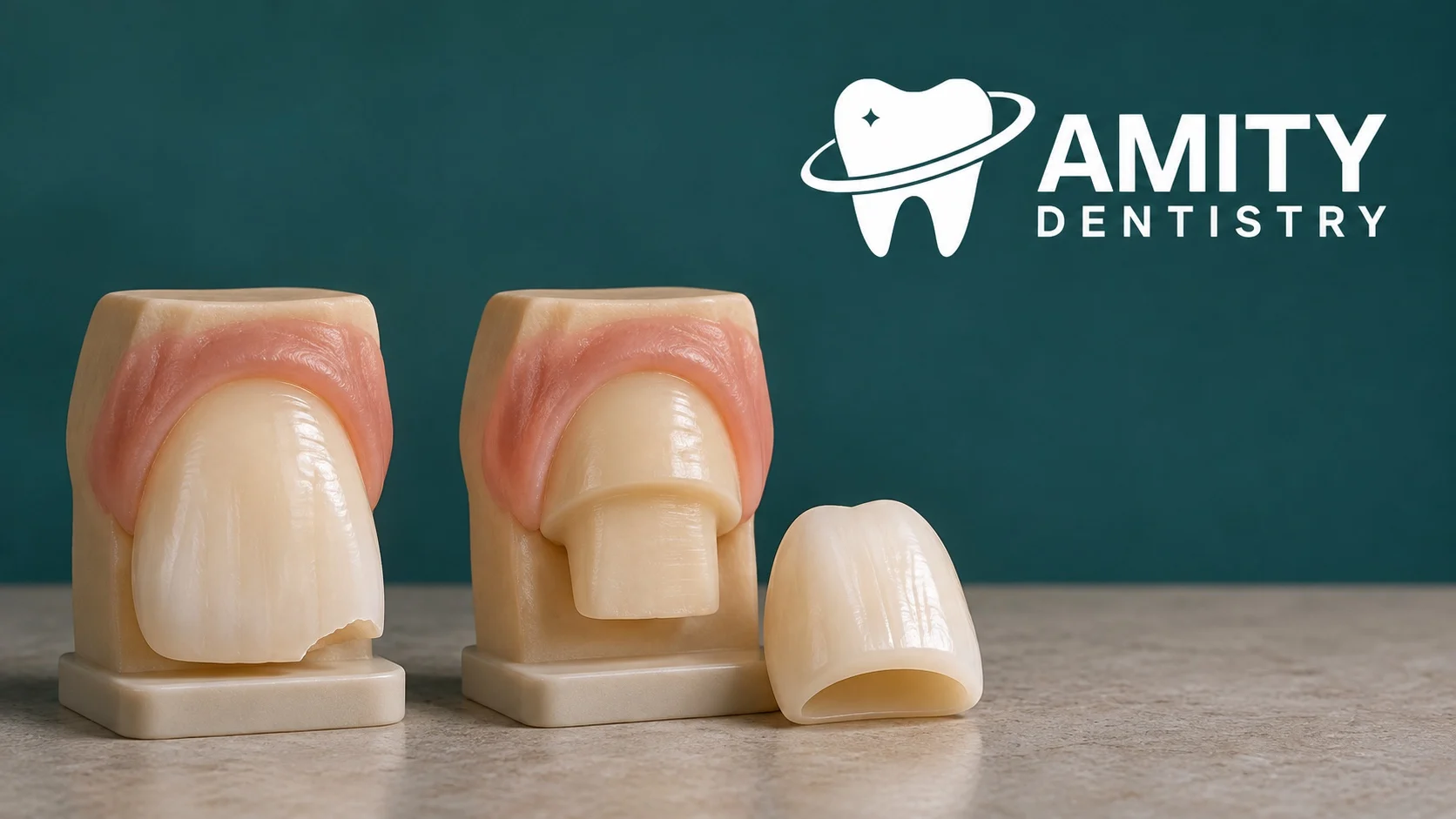
A crown is a cap that covers the broken tooth, as the NHS explains. The AAE describes one example in which part of a tooth’s chewing surface breaks away, often around a filling. This is called a fractured cusp, and a filling or crown may be used to protect the damaged tooth.
The NHS’s treatment overview explains that the tooth is shaped so a crown can fit over it. If a crown is recommended, ask the dentist to show you what needs protection, which alternatives were considered, how much preparation is proposed, and what the appointments and follow-up would involve.
The decision is more specific than “crowns are stronger.” You need to understand why covering this particular tooth is being recommended and what the expected benefits and limitations are. A crown is not a guarantee that a cracked tooth will last indefinitely.
Could the answer be something else?
Yes. A recovered fragment may sometimes be reattached. The NHS also lists a filling or crown among treatments for a damaged tooth, and says root canal treatment may be needed when a badly broken tooth exposes the nerves.
A crack needs its own assessment. The AAE explains that treatment depends on the crack’s type, location, and extent. Some teeth need further treatment or cannot be saved. A crown does not make a crack heal, and it cannot guarantee long-term success.
Ask whether the tooth has a chip, a crack, or both, and whether a specialist evaluation is appropriate. Do not assume that a crown automatically means a root canal, or that having little pain rules out a problem inside the tooth.
What can you do while arranging care?
Call a dental office and describe the injury so the team can advise you about the next step. The NHS recommends seeing a dentist for a chipped, broken, or cracked tooth, even if it does not seem severe.
If you find a broken fragment, the NHS advises keeping it in milk or saliva in a container and taking it to the dentist; reattachment may be possible. If the tooth is sore, choose softer foods and avoid chewing with it while arranging advice. Do not place aspirin directly on the affected tooth or gums, a precaution included in the AAE’s cracked-tooth guidance.
Tell the team if pain is severe, swelling is developing, or you have trouble using the tooth. Swelling around the mouth or neck that makes breathing, swallowing, or speaking difficult needs emergency medical care. In the United States, call 911 for a medical emergency; that is separate from calling a dental office to check availability.
Frequently asked questions
Does a chip need attention if it does not hurt?
Yes. The NHS advises a dental assessment for a chipped, broken, or cracked tooth. Pain alone does not establish which repair is appropriate. Explain when the damage happened and any changes you have noticed.
Should I bring the broken piece?
Yes, if you find it. Keep it in a container with milk or saliva and bring it to the appointment. The dentist can assess whether reattachment is possible; finding the piece does not guarantee it can be used.
Does a crown mean I also need root canal treatment?
Not automatically. Ask what the examination shows about the inside of the tooth and why each treatment is being considered. The NHS identifies nerve exposure in a badly broken tooth as one situation in which root canal treatment may be needed.
Can I decide on bonding from a photo?
A photograph can help explain what you noticed, but it does not replace an examination. Tell the dentist that you would like to discuss bonding, then ask whether the tooth’s condition supports that choice and what alternatives you should understand.
Can Amity repair it the same day?
Call (980) 423-1244 to describe the injury and check current availability. The team will confirm whether and when you can be seen. The examination determines the treatment plan; an assessment and a completed repair are different steps.
Arrange an assessment in South Charlotte
Amity Dentistry offers bonding, crowns, and assessment of urgent dental concerns at our Pineville-Matthews Road office in South Charlotte. Call (980) 423-1244 about a new injury and check availability before travelling. For a nonurgent consultation, you can request an appointment.
Related reading
This article provides general information and does not replace an individual examination or your treating clinician’s instructions.
Sources
- American Association of Endodontists: Cracked Teeth.
- NHS: Chipped, broken or cracked tooth.
- NHS: Dental treatments — crown coverage and preparation.
- NHS: Toothache.