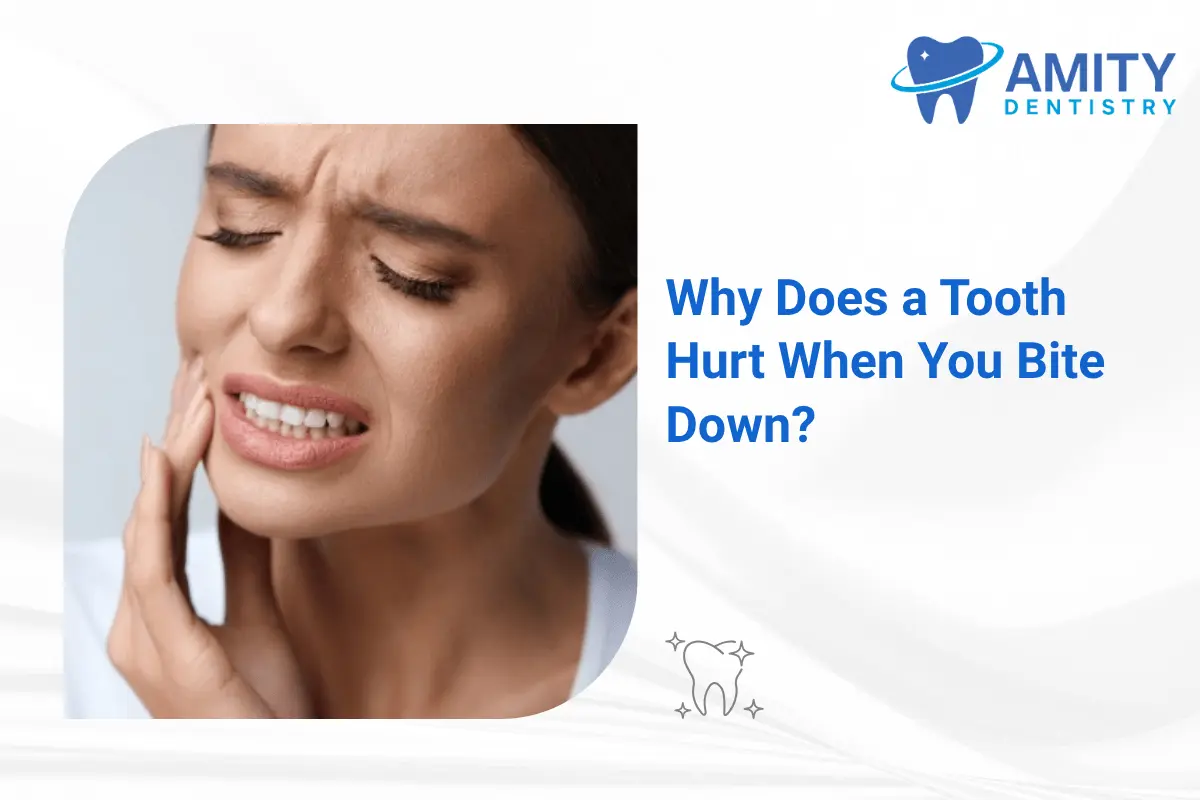
Teeth are not rigidly fixed structures. They sit in sockets of bone surrounded by the periodontal ligament, a network of tissue that absorbs the forces of biting and chewing. Inside each tooth, the pulp contains nerves and blood vessels. When something disrupts the normal structure of the tooth or its surrounding tissue, biting down applies pressure to that disruption and triggers pain.
The pain itself is a signal that something has changed. It might be structural damage to the tooth, infection inside or around the tooth, inflammation of the surrounding tissue, or a bite that is putting abnormal force on a specific tooth. Each of these has a different cause and a different treatment, but all of them respond better to earlier intervention than later.
Overview: Why Does a Tooth Hurt When You Bite Down
- Tooth hurt when biting down often indicates a cracked tooth, decay, infection, or bite misalignment affecting the periodontal ligament.
- Pain may feel sharp on release of bite pressure or during chewing and usually points to structural or nerve involvement.
- Upper molar pain can sometimes be linked to sinus pressure, which mimics dental pain without tooth damage.
- Morning biting discomfort is commonly associated with teeth grinding (bruxism) and jaw muscle strain.
- Persistent or worsening pain should be evaluated by a dentist, as these conditions rarely resolve without treatment.
Common Reasons Tooth Hurt When Biting Down
1. Cracked Tooth
A cracked tooth is one of the most common causes of biting pain and one of the most difficult to diagnose because cracks are often invisible to the naked eye and do not always show on X-rays. The characteristic symptom is sharp pain that occurs at a specific point in the bite, often when biting down on a particular side or releasing the bite rather than during the full chewing motion.
Cracks can range from superficial enamel crazes that do not cause pain to deep cracks that extend into the pulp and require root canal treatment or extraction. Contributing factors include:
- Chewing on hard foods like ice, hard candies, or unpopped popcorn kernels
- Teeth grinding (bruxism) that fatigues the tooth structure over time
- Large existing fillings that weaken the remaining tooth structure
- Trauma from a hit to the face or an accident
A cracked tooth that is not treated does not heal on its own. Cracks tend to propagate with continued biting force, and what starts as a manageable crack can become a split tooth that cannot be saved.
2. Cavity or Decay
Deep decay that has progressed through the enamel and into the dentine or pulp causes pain on biting because the pressure of chewing reaches the sensitive inner structures of the tooth. Earlier decay rarely causes biting pain because the enamel layer provides insulation. By the time biting pressure causes pain, the decay has typically reached a stage that requires more than a simple filling.
A tooth that was previously filled and has developed secondary decay around the edges of the filling is a common source of unexplained biting pain, particularly when the original filling is not visually deteriorated enough to suggest a problem.
3. Abscess or Infection
An abscess is a pocket of infection that forms either inside the tooth when the pulp becomes infected (periapical abscess) or in the gum and bone surrounding the tooth (periodontal abscess). Abscess pain on biting is typically more diffuse and persistent than cracked tooth pain. The tooth may be sensitive to pressure from any direction, not just a specific biting angle.
Signs that biting pain may involve infection include:
- Persistent dull ache that does not fully resolve between biting events
- Sensitivity to heat that lingers after the stimulus is removed
- Visible swelling in the gum near the affected tooth
- A small pimple-like bump on the gum (a fistula draining the infection)
- General feeling of being unwell or mild fever in severe cases
An abscess requires prompt dental treatment and follow up oral screening for infection checkup. The infection will not resolve without intervention and can spread to surrounding teeth, bone, and in serious cases to other areas of the body.
4. Gum Disease
Inflammation and infection of the gum and bone tissue surrounding the tooth cause pain when biting because the periodontium, the structure that supports the tooth in the socket, is compromised. A tooth whose supporting bone has been reduced by periodontal disease is more mobile than a healthy tooth and more sensitive to biting forces.
Pain in multiple teeth when biting, generalised soreness across the gum line, and bleeding gums that accompany biting pain are all indicators that gum disease, rather than a tooth-specific problem, may be the cause.
Get Periodontal Checkups and Treatments at Amity Dentistry in Charlotte, NC
5. Grinding and Clenching (Bruxism)
Bruxism is the habit of grinding or clenching the teeth, most commonly during sleep. The forces generated by bruxism significantly exceed normal biting forces and cause cumulative damage to tooth structure, the periodontal ligament, and the jaw joint. Teeth that have been subjected to prolonged bruxism become sore throughout the entire arch rather than at a single tooth, and the pain is often worse in the morning after a night of grinding.
Associated symptoms of bruxism include:
- Worn flat or chipped biting surfaces on multiple teeth
- Jaw muscle soreness or fatigue when waking
- Headaches concentrated in the temples on waking
- Sensitivity across multiple teeth rather than a single tooth
- A partner reports grinding sounds during sleep
A night guard fitted by a dentist does not stop the grinding habit but protects the teeth from the forces it generates and reduces the soreness that accumulated damage produces.
Getting a Night Guards helps to Stop Teeth Grinding in Sleep
6. Bite Problems and High Fillings
A filling, crown, or other dental restoration that sits even slightly too high in the bite places that tooth in the path of biting force before the surrounding teeth make contact. The tooth receives the full force of every bite rather than sharing it across the full arch. This causes inflammation of the periodontal ligament and pain that is precisely located to the restored tooth.
A high bite is one of the most straightforward dental problems to resolve. The dentist adjusts the restoration in a single appointment to bring the tooth back into the correct occlusal relationship. The inflammation and pain typically resolve within a few days of the adjustment.
7. Sinus Pressure
The roots of the upper back teeth sit close to the maxillary sinuses. When sinus pressure increases due to a cold, sinus infection, or seasonal allergies, it can compress the roots of the upper molars and cause pain that feels like a tooth problem. The distinguishing feature of sinus-related molar pain is that multiple upper back teeth are sore simultaneously, the pain tends to be bilateral, and it correlates with nasal congestion or sinus pressure symptoms.
8. Loose or Failing Dental Work
Existing crowns, fillings, and bridges that have deteriorated or failed to maintain their seal allow movement and microleakage that cause pain when biting forces are applied. A crown that has become loose may rock slightly under bite pressure, transmitting force to the underlying tooth structure in a way that causes sharp localised pain.
Why Do My Front Teeth Hurt When I Bite Down?
Front tooth biting pain has a slightly different set of likely causes than back tooth pain. Common causes specific to the front teeth include:
- Trauma from impact that caused a crack or root injury, not immediately apparent
- Bite problems where the front teeth carry more force than they are designed for
- Tooth grinding that preferentially wears the front tooth edges
- Gum recession that has exposed sensitive root surfaces on the front teeth
- An abscess at the root tip of a front tooth following prior injury
Why Do My Molars Hurt When I Bite Down?
Molar pain on biting is the most common presentation because molars carry the highest biting forces during chewing. The most likely causes of molar pain specifically include:
- Cracked molar from chewing hard food or from an old, large filling
- Decay under an existing filling or crown
- Partially erupted or impacted wisdom tooth causing pressure on the adjacent molar
- Periodontal disease affects the bone support around the molar roots
- Abscess at the root tip of the molar
Pain in the lower back molar on one side that is worsening is one of the presentations that most frequently requires prompt attention, as it often indicates either an abscess or a cracked tooth that will worsen with continued use.
TMJ Disorder can also lead to Biting Pain: Learn about TMJ Disorder
When Should You See a Dentist for Biting Pains Issues?
Any tooth pain that occurs consistently when biting down needs a dental appointment. The self-resolution rate for biting pain is low because the underlying causes, such as structural damage, infection, and bite problems, do not improve without intervention.
See a dentist promptly if:
- The pain is severe or worsening over the days
- The tooth is sensitive to heat or cold that lingers after the stimulus is removed
- There is visible swelling in the gum or face
- You feel unwell alongside the tooth pain
- The pain is keeping you awake at night
- Multiple teeth are affected simultaneously
We at our dentistry in Charlotte, we see patients with biting pain as a priority concern. Our approach to dental emergencies are to address the pain first, making sure you are comfortable, before engaging into treatments. An examination that includes clinical assessment and X-rays identifies the cause of biting pain accurately and allows the right treatment to be planned rather than managing symptoms that will keep returning until the underlying cause is addressed.