Root canals have a reputation they don’t deserve. For most patients, the procedure itself is no more uncomfortable than getting a filling. It ends the severe pain caused by an infected tooth. At Amity Dentistry, we provide root canal treatment for patients in Charlotte, Pineville, Matthews, and surrounding communities, including same-day emergency care when infection or pain can’t wait.
If you’re dealing with a severe toothache, sensitivity that lingers long after eating or drinking, or swelling near a tooth, these are signs the nerve may be involved. The sooner it’s treated, the better the outcome.
Call (980) 423-1244 for a same-day emergency appointment or to schedule a consultation.
We see patients from SouthPark, Ballantyne, Pineville, Matthews, Steele Creek, South End, and Dilworth. Our Charlotte office is 10 minutes from SouthPark and easily accessible from Pineville via I-485.
Family-owned and trusted by 150+ Charlotte families.
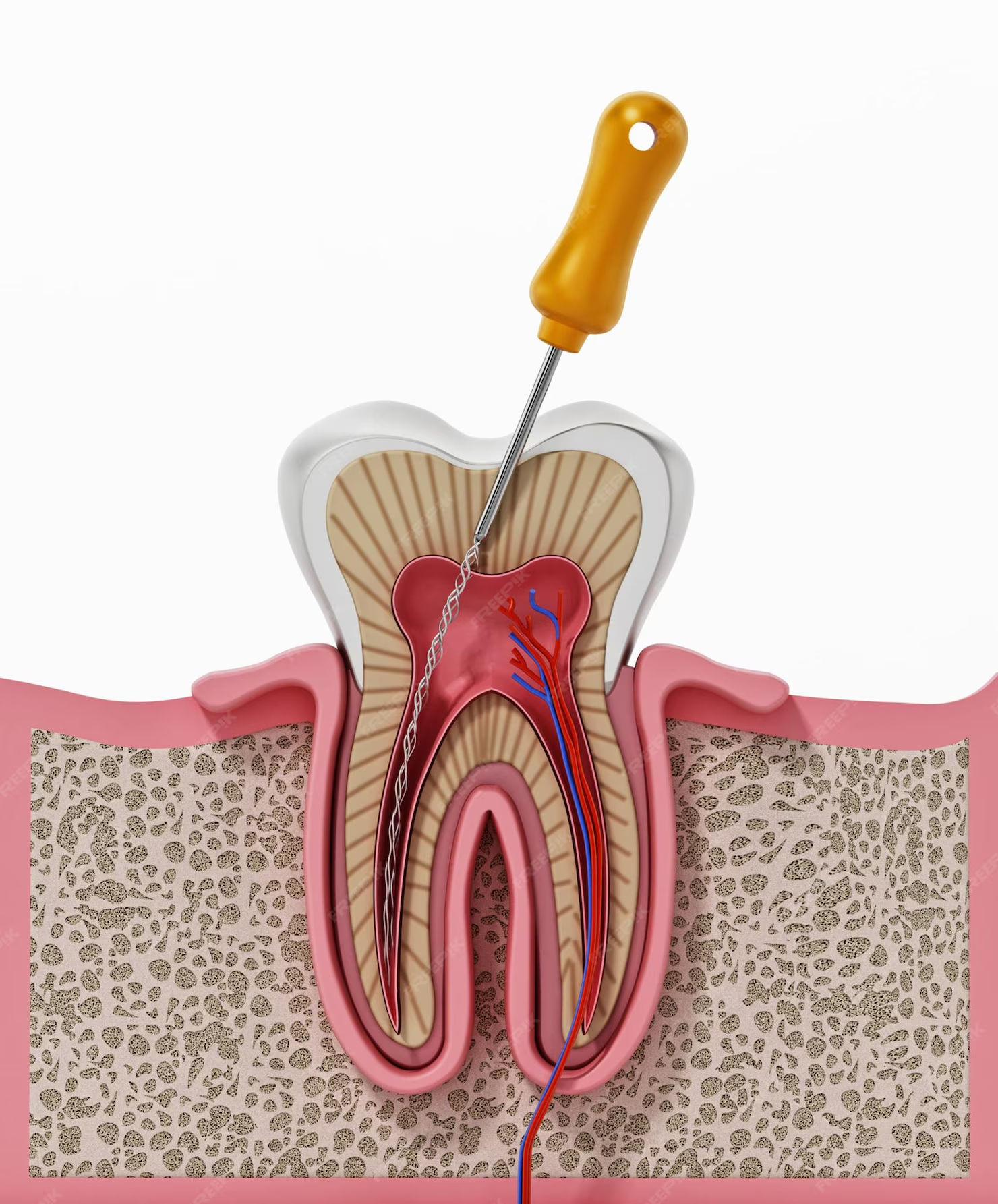
Each tooth contains pulp, soft tissue with nerves, blood vessels, and connective tissue. The pulp extends from the crown down through root canals to the bone. When pulp becomes infected or damaged, it can’t heal on its own. Bacteria multiply within the pulp chamber and root canals, eventually causing abscess formation at the root tip.
A root canal becomes necessary when the pulp inside a tooth becomes infected or severely inflamed. This happens when:
Signs you may need a root canal:
Not every case has obvious symptoms. Sometimes an infection is discovered during a routine exam with X-rays before pain develops. Catching it at that stage makes treatment simpler.

We take digital X-rays to assess the extent of the infection and the anatomy of the tooth’s root system. This guides the treatment and helps us give you an accurate picture of what’s involved.
The area is fully numbed with local anesthesia before anything begins. We don’t proceed until you’re completely comfortable. Most patients are surprised by how little they feel during the procedure.
We access the pulp chamber, remove the infected or inflamed tissue, and carefully clean and shape the root canals. Irrigation is used to flush out remaining bacteria.
The cleaned canals are filled with a biocompatible material and sealed to prevent reinfection.
After root canal treatment, the tooth structure is typically weakened. In most cases, a crown is placed to protect the tooth and restore full chewing function. This is usually done at a follow-up appointment.
Most root canal procedures are completed in one to two visits. We walk you through your specific situation before starting.
Some tenderness is normal for a few days after root canal therapy Charlotte procedures. Over-the-counter pain medication typically provides adequate relief. Avoid chewing on the treated tooth until the permanent restoration is placed.
The tooth needs a permanent restoration, usually a crown, to protect it from breaking. Teeth requiring root canals often have significant damage or large fillings. Without a crown, they’re prone to fracture.
We schedule a follow-up appointment to place the final restoration. Once crowned, the tooth functions normally and can last as long as your other teeth with proper care.
Root canal therapy in Charlotte NC saves teeth that would otherwise require extraction. Keeping natural teeth is always preferable when possible. Natural teeth preserve jawbone, maintain bite alignment, prevent remaining teeth from shifting, and function better than any artificial replacement.
Extraction might seem simpler, but replacing the tooth with an implant, bridge, or partial denture involves additional time, procedures, and cost. Root canal treatment is often the most conservative, cost-effective option.
Root canal therapy has high success rates, typically above 95%. Most treated teeth last as long as natural teeth. Factors affecting success include the extent of infection, tooth location, canal complexity, and restoration quality.
Occasionally, teeth don’t heal as expected or become reinfected years later. In these cases, retreatment may be possible. During retreatment, we remove the original filling material, clean and disinfect the canals again, and refill them.

While not all root canal needs are preventable, you can reduce risk. Maintain good oral hygiene to prevent decay. Address cavities promptly before they reach the pulp. Wear mouthguards during sports to protect teeth from trauma. Avoid chewing hard objects that might crack teeth.
Regular dental checkups catch problems early. Small cavities are easily treated with fillings. Addressing issues promptly prevents progression to the point where root canals become necessary.
Dental infections don’t wait. An untreated abscess can spread beyond the tooth to the surrounding bone and tissue. If you’re in significant pain or have swelling near a tooth in Charlotte or Pineville, contact us immediately.
Pain relief is our #1 priority.
Dr. Shrestha personally handles all emergency cases. No referrals to unfamiliar specialists. Same-day digital X-rays for immediate diagnosis.
These steps manage symptoms temporarily. Professional treatment is still required.
If you’re searching for an emergency dentist in Charlotte without insurance, we’ll work with you on a payment solution before your appointment.