Modern medicine features many specialists. Dentistry is the same. You know about orthodontists for braces. You know about endodontists for root canals. You know about oral surgeons for wisdom teeth. This specialization leads many to ask a simple question. Why do I need a general dentist?
The general dentist remains the single most important part of your long-term oral health.
Specialists focus on one specific area. General dentist in Charlotte focus on your overall health. They are your primary care provider for your mouth. They diagnose, treat, and manage your oral health needs. They coordinate care with specialists. They are the foundation of dental care. This role is not shrinking. It is expanding.
Your general dentist provides three essential types of care: preventive, restorative, and cosmetic. They also maintain a complete history of your health. This comprehensive approach is vital. It protects your health and saves you money.
What is a General Dentist?
A general dentist in Pineville is a doctor of oral health. They complete four years of dental school. They earn either a Doctor of Dental Surgery (DDS) or Doctor of Medicine in Dentistry (DMD) degree. These two degrees are identical in their education and qualifications. The name simply depends on the university.
After dental school, general dentists must pass national and state licensing exams. They do not specialize in one area. Instead, their training is broad. It covers all aspects of dentistry. They are trained to care for patients of all ages, from a child’s first tooth to senior care. This is why many general dentists are also called family dentists.
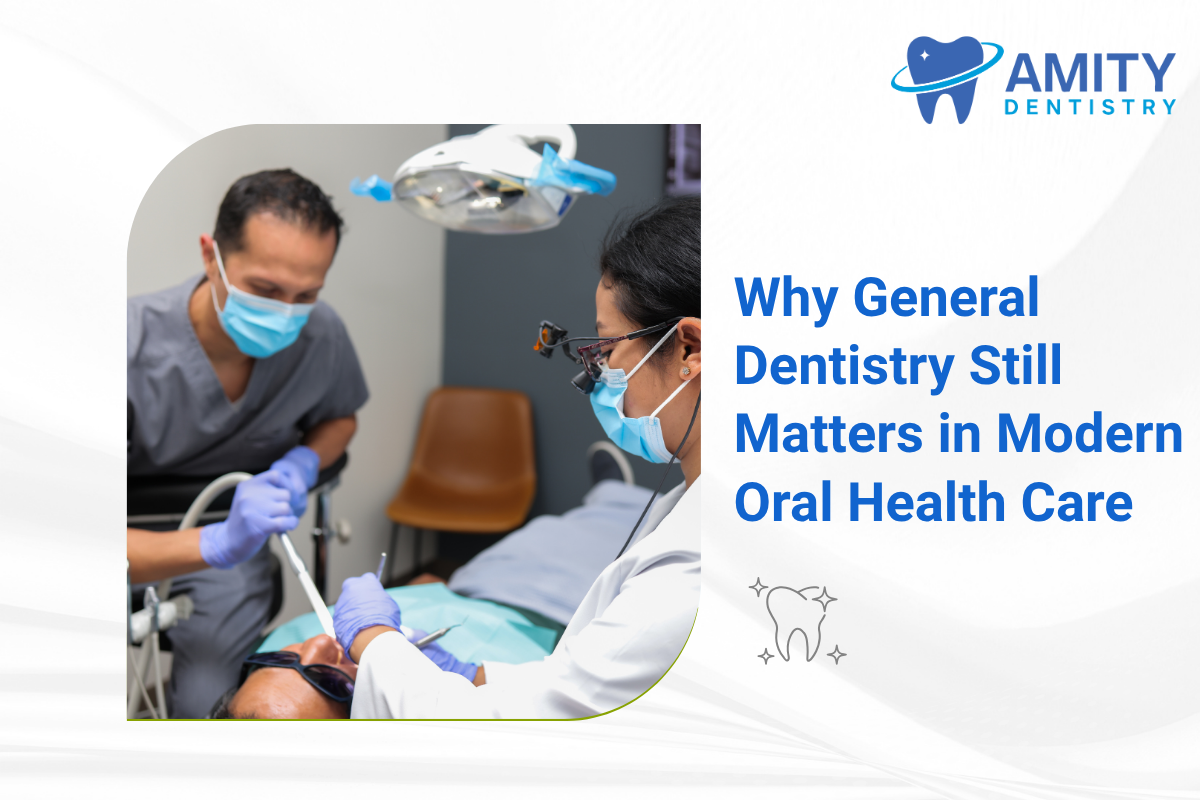
The general dentist is your first line of defense. They perform routine checkups. They spot signs of disease. They create treatment plans. If you need a specialist, your general dentist identifies the problem. They refer you to a trusted colleague. Then, they oversee your progress after you return. They are the central point of contact for your total dental wellness.
The core mission of general dentistry is prevention. It is always better to stop a problem before it begins. Preventive care includes all the services that keep your mouth healthy.
What Happens During a Preventive Dentistry Visit?
A preventive visit, or checkup, usually happens every six months. This visit is not just a cleaning. It is a detailed health screening.
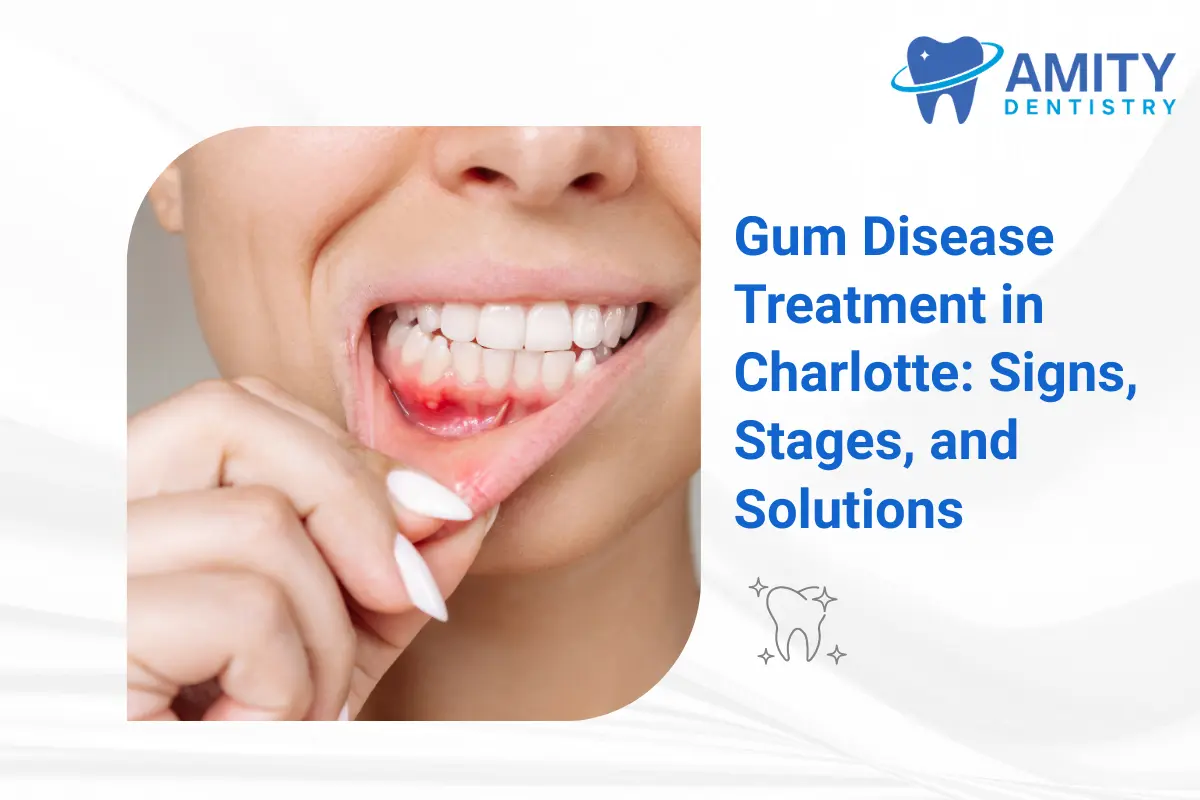
First, the dental hygienist performs a professional cleaning, or prophylaxis. They use special tools to remove calculus, also known as tartar. Tartar is a hardened plaque. You cannot remove it at home with a toothbrush. If tartar builds on teeth, it irritates the gums. This leads to gum disease. The hygienist also polishes your teeth. This removes surface stains.
Second, the general dentist performs a comprehensive exam. They check every tooth for signs of decay (cavities). They look at your existing fillings, crowns, or other restorations. They ensure these are still strong.
Third, the exam includes a periodontal screening. The dentist or hygienist uses a small probe. They measure the space, or pocket, between your tooth and your gums. Healthy pockets are shallow, usually 1 to 3 millimeters. Deeper pockets suggest signs of gum disease (gingivitis or periodontitis).
Fourth, you will receive an oral cancer screening. Your dentist in Charlotte Nc checks your gums, tongue, cheeks, palate, and throat. They look for any abnormal red or white patches, lumps, or sores. This screening is fast. It is also a vital health check.
Fifth, the team takes dental X-rays. These are not always needed at every visit. Your dentist determines the schedule based on your risk factors. X-rays are a crucial diagnostic tool. They show problems the eye cannot see. This includes decay between teeth, infections in the bone, abscesses, and bone loss from gum disease.
Why Prevention Saves You Money?
Dental problems do not heal on their own. They only get worse. Preventive care finds problems when they are small.
A tiny cavity found on an X-ray is a simple fix. Your dentist places a small filling. The procedure is quick. The cost is low.
If you skip checkups, that tiny cavity grows. It spreads deeper into the tooth. It reaches the nerve. Now, the tooth is infected. You have a severe toothache. The simple filling is no longer an option. You now need a root canal. You also need a dental crown to protect the treated tooth. This treatment costs many times more than the original filling.
If the tooth is too damaged, it requires extraction. You lose the tooth. Now you must consider replacing it. A dental implant or a bridge is a major expense.
Your six-month checkup is an investment. It stops this cascade. It saves you from pain, complex procedures, and high costs.
Your oral health is not separate from your body. Your mouth is a window into your general health. A general dentist often spots signs of systemic diseases.
The link between gum disease and other conditions is strong. Bacteria from infected gums enter your bloodstream. This creates inflammation throughout the body.
Studies connect poor oral health to several serious conditions. This includes heart disease, strokes, and respiratory infections. People with diabetes have a higher risk of gum disease. Gum disease also makes it harder to control blood sugar. The two conditions feed each other.
Your general dentist protects more than your teeth. They protect your life. The oral cancer screening is a prime example. Regular checkups find these issues early.
Even with great prevention, problems happen. Teeth crack. Old fillings fail. Cavities form. This is where restorative dentistry comes in. Your general dentist is an expert in restoring your teeth to full function.
What is Restorative Dentistry?
Restorative dentistry refers to procedures that repair or replace damaged teeth. The goal is to fix the problem. The secondary goal is to restore your bite and your smile. General dentists perform a wide array of restorative treatments.
Fillings
This is the most common restorative procedure. When a cavity forms, the dentist removes the decayed part of the tooth. They then fill the space with a durable material. Modern fillings use composite resin. This material is tooth-colored. It bonds directly to the tooth, making it strong.
Crowns
A dental crown is a cap. It covers the entire visible portion of a tooth. You might need a crown if a tooth is badly broken. You also need one if a cavity is too large for a filling. Teeth are weak after a root canal. A crown protects them from breaking. The dentist prepares the tooth. They take an impression. A lab or an in-office machine makes a custom crown. The dentist cements the crown in place.
Root Canals
Many people fear root canals. The procedure actually relieves pain, it does not cause it. A tooth’s nerve and pulp is in its center. If decay or trauma damages this pulp, it becomes infected. This causes a severe abscess and pain. During a root canal, the dentist removes the infected pulp. They clean the inside of the tooth. They seal it. The tooth is no longer alive, but it is saved. Most general dentists perform root canals, especially on front teeth.
Bridges
A dental bridge replaces one or more missing teeth. It uses the teeth on either side of the gap as anchors. These anchor teeth receive crowns. A false tooth (or teeth) is fused between them. This bridges the gap.
Extractions
When a tooth is too damaged to save, the dentist removes it. This is called an extraction. General dentists perform many extractions, including for wisdom teeth.
Dentures
For patients missing many or all teeth, dentures are a solution. A general dentist takes impressions. They design custom-fit partial or full dentures. This restores your ability to chew and speak.
The General Dentist’s Role in Modern Solutions
General dentistry is not stuck in the past. Your primary dentist also manages modern treatments. This includes cosmetic services and advanced tooth replacement.
A healthy smile is also a confident one. Your general dentist offers services to improve your smile’s appearance.
Teeth Whitening
Professional whitening is safe. It provides consistent results. Your dentist offers in office treatments or custom take-home trays.
Veneers
Veneers are thin shells of porcelain. They are bonded to the front of your teeth. They fix issues like chips, stains, or small gaps.
Clear Aligners
Many general dentists now offer orthodontic solutions. Clear aligners, like Invisalign, straighten teeth. Your general dentist manages the whole process. Straight teeth are also easier to clean. This makes it both a cosmetic and a health procedure.
How General Dentists Manage Tooth Replacement
Losing a tooth affects your bite and your confidence. Decades ago, the options were bridges or dentures. Today, the standard is dental implants.
A dental implant is a titanium post. A surgeon places it in your jawbone. It acts like an artificial tooth root. It fuses with the bone.
Your general dentist is key to this process. They often coordinate the surgery. After the implant heals, you return to your general dentist. The dentist designs and places the final restoration. This is the crown that attaches to the implant post. It looks and functions just like a natural tooth.
Why Your Local Pineville Dentist Matters
You need a dental home. You need a team you trust. This is the value of a local dentist.
A comprehensive dental office in Pineville is a partner in your health. You build a relationship with the dentist and the team. They know your health history. They know your dental anxiety. They know your family.
This continuity of care is important. When you have one team managing your health, nothing gets missed. Your preventive care, restorative needs, and cosmetic goals are all in one place.
If you have a dental emergency, you have a team to call. You are not searching for a stranger. You are calling your dentist.
Local Pineville dental offices provide these comprehensive services. They manage routine cleanings for your children. They place crowns for you. They help your parents with denture care. This full-spectrum approach simplifies your life. It provides better health outcomes. Look for a Pineville dentist who listens to your concerns. Find an office that explains your options clearly.
Your oral health is a lifelong journey. Your general dentist is your guide. They are not just fixing teeth. They are maintaining your health. Improve your smile with a trusted Charlotte dentist. Call 980-423-1244 to schedule your visit and Book Now.