Wisdom teeth are the last teeth to arrive. They appear in the very back of your mouth. For many people, their arrival brings significant pain and discomfort. This experience is a common part of early adulthood. The pain is a signal from your body. It is telling you something is wrong.
Ignoring wisdom tooth pain is a risk. What starts as a dull ache will often develop into a serious problem. Understanding the cause of this pain helps you know when to seek professional care. Prompt dental treatment prevents complications. It protects your overall oral care and health.
This guide explains the symptoms of problematic wisdom teeth. It details the treatment options available. It will help you understand when to call your dentist in Charlotte for help.
What Are Wisdom Teeth?
Wisdom teeth are your third molars. They sit in the four back corners of your mouth, two on top and two on bottom. They are the last of your 32 teeth to erupt through the gums. This usually happens between the ages of 17 and 25.
These teeth get their name from this timeframe. This period is often called the “Age of Wisdom”. It is when a person transitions from their teen years into adulthood.
Millions of years ago, our ancestors had wider jaws. They ate a coarse diet of roots, nuts, and tough plants. These third molars were necessary for grinding this food.
Over time, human diets changed. Our food became softer. Our jaws evolved to become smaller and narrower.
Today, most people do not have enough space in their jaws for these four extra teeth. This lack of space is the primary reason wisdom teeth cause problems. They have no room to grow properly.
Why Do Wisdom Teeth Cause Pain?
Pain is your body’s alarm system. When a wisdom tooth hurts, it is for a specific reason. The pain is almost always a symptom of an underlying issue. There are several common causes.
Impaction
Impaction is the most frequent cause of wisdom tooth pain. An impacted tooth is one that is blocked. It is stuck. It cannot fully erupt into its normal position. This happens because there is not enough room in the jaw.
The tooth becomes trapped by the jawbone, gum tissue, or the neighboring tooth. There are different types of impaction.
Soft Tissue Impaction: The tooth has erupted from the jawbone but is trapped by the gum tissue.
Partial Bony Impaction: The tooth is partially erupted, but part of it remains stuck in the jawbone.
Full Bony Impaction: The tooth is completely encased within the jawbone.
You Must Also Read: What is Sedation Dentistry
An impacted tooth creates pressure. It pushes against the tooth next to it, the second molar. This pressure causes a dull, throbbing ache in the back of the jaw. The tooth is trying to erupt but has nowhere to go. This pressure leads to inflammation and pain.
Pericoronitis
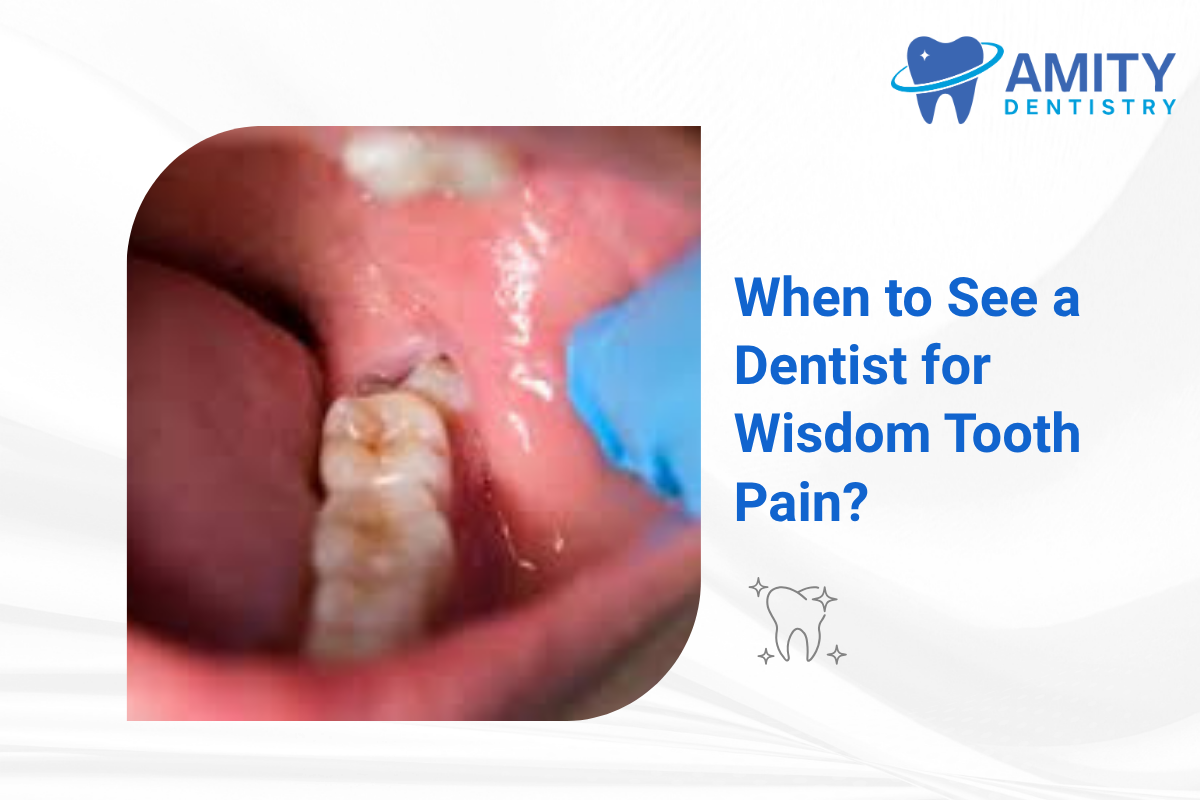
This is a specific and common type of infection. It happens with partially erupted wisdom teeth. When a tooth is partway through the gum, a small flap of gum tissue (called an operculum) remains over the top.
This gum flap is a trap. Food particles and bacteria get lodged underneath it. This area is impossible to clean with a toothbrush or floss. The trapped bacteria multiply. This leads to an infection and inflammation of the gum tissue.
The symptoms of pericoronitis are distinct. You will experience red, swollen gums around the wisdom tooth. It is often painful to bite down. You might have a bad taste or bad smell coming from the area. In severe cases, the infection causes jaw stiffness and facial swelling.
Crowding and Damage to Other Teeth
When an impacted wisdom tooth grows at an angle, it pushes directly on the roots of the second molar. This constant pressure is damaging. It pushes your other teeth out of alignment. This causes crowding and orthodontic problems.
This pressure does more than move teeth. It wears away the structure of the neighboring tooth. It causes root resorption, which is the breakdown of the root. This pressure creates a space where plaque builds up. This often leads to a severe cavity on the back of the second molar. This is a tooth you need for chewing.
The pain from crowding is often a persistent, dull ache. You might feel pressure on your entire row of teeth. This damage to a healthy, necessary tooth is a primary reason dentists recommend wisdom tooth extraction.
Cavities (Dental Caries)
Wisdom teeth are difficult to clean. They are located in the very back of your mouth. It is hard to reach them properly with a toothbrush. Flossing around them is also a challenge.
Because they are hard to clean, plaque and bacteria build up quickly. This leads to tooth decay. A cavity in a wisdom tooth causes the same pain as a cavity in any other tooth. You will feel sensitivity to sweet foods. You might feel pain with hot or cold drinks. The pain often becomes a sharp, throbbing ache.
A cavity on a wisdom tooth is often difficult to fix with a filling. The location makes the procedure hard. Many dentists will recommend removing the tooth instead of trying to repair it.
Cysts and Tumors
This is a less common but more serious complication. A wisdom tooth develops within a sac inside the jawbone. In some cases, this sac fills with fluid after the tooth is impacted. This fluid-filled sac becomes a cyst.
A cyst, known as a dentigerous cyst, will grow over time. It is a silent problem at first. As it expands, it destroys the jawbone. It damages the roots of nearby teeth. It places pressure on the nerves in your jaw.
The pain from a cyst is often a dull, persistent ache within the jaw itself. You might notice swelling. In rare cases, a tumor develops from this cyst. An X-ray is the only way to identify a cyst.
What Are the Symptoms of a Problem Wisdom Tooth?
You need to know what signs to look for. Some discomfort is normal as a tooth erupts. Persistent pain is not. Here are the symptoms that mean you have a problem.
Pain in the Back of the Jaw
This is the most obvious sign. The pain is a dull throb or a sharp, intermittent pain. It might be constant. It might only hurt when you chew.
Red or Swollen Gums
Look in your mouth. The gum tissue around your back molars will look puffy, red, and irritated.
Tender or Bleeding Gums
The area will be sensitive to touch. Your gums might bleed when you brush your teeth.
Jaw Pain and Stiffness
The pain radiates into your jaw. You might find it hard to open your mouth wide. This is called trismus.
Facial Swelling
The side of your cheek or jawline looks swollen. The area might be tender to the touch from the outside.
Bad Breath or a Bad Taste
A persistent bad taste or foul smell in your mouth is a sign of infection. This is common with pericoronitis.
Headache or Earache
The jaw pain often radiates. It travels up the side of your face. It presents as a headache or an ache deep inside your ear canal.
Pus Drainage
You might see a white or yellow fluid oozing from the gum flap. This is pus. It is a definite sign of an infection.
If you experience these symptoms, you need to see a dentist.
How to Know When to See a Dentist
Temporary, mild discomfort as a tooth pushes through is one thing. The symptoms listed above are different. They signal a problem that requires professional dental treatment.
Do not wait for the pain to become unbearable. See your dentist if you experience:
- Pain that lasts for more than a few days.
- Pain that is not relieved by over-the-counter pain medication.
- Pain that interferes with eating or sleeping.
You need to seek help immediately if you have symptoms of a serious infection.
- Severe, throbbing pain.
- Swelling in your cheek, jaw, or neck.
- Fever or chills.
- Difficulty swallowing or breathing.
- Pus coming from the area.
- Inability to open your mouth.
An untreated dental infection is dangerous. It spreads to other parts of your body. If you live in or near Pineville, it is important to have a trusted dental team. A local Pineville Dentist at Amity Dentistry is prepared to handle these urgent situations. We can assess your wisdom tooth pain and provide the care you need.
The best approach is a proactive one. Regular dental checkups allow your dentist to monitor your wisdom teeth with X-rays. They can see a problem, like impaction, long before it ever causes you pain. This allows you to plan for a tooth extraction on your own schedule.
What Does a Dentist Do for Wisdom Tooth Pain?
When you visit your dentist for wisdom tooth pain, the first goal is to diagnose the cause. The treatment depends entirely on the source of the problem.
Step 1: The Examination
Your dentist will first talk to you. They will ask about your symptoms, your pain level, and your medical history. They will then perform a visual examination. They will look at the wisdom tooth and the surrounding gums. They will check for swelling, redness, and signs of infection. They will check the neighboring tooth for damage.
Step 2: Dental X-Rays
You cannot see an impacted tooth with your eyes alone. An X-ray is essential for a correct diagnosis. A panoramic X-ray is the most common tool. This X-ray gives a complete view of your entire jaw, all your teeth, and your sinuses.
This X-ray shows your dentist:
- The exact position of your wisdom tooth.
- If the tooth is impacted.
- The angle of the impaction.
- The presence of any cysts.
- Any damage to the jawbone.
- Any damage to the roots of your second molar.
Step 3: Discussing Treatment Options
Once a diagnosis is made, your dentist will explain your options.
If You Have Pericoronitis: The immediate treatment is to clear the infection. Your dentist will thoroughly clean the area. They will irrigate under the gum flap with an antiseptic solution. This flushes out the trapped bacteria and food debris. If the infection is severe, your dentist will prescribe antibiotics. They will also recommend warm salt-water rinses at home.
This treatment provides relief. It does not solve the underlying problem. The gum flap is still there. The infection will likely return. Your dentist will almost always recommend extracting the tooth to prevent this.
If You Have a Cavity: In some cases, a small cavity on a fully erupted wisdom tooth is filled. This is often not the best long-term solution. The tooth is still hard to clean. It is likely to decay again. Tooth Extraction is usually the recommended dental treatment.
If You Have Impaction, Crowding, or a Cyst: The definitive treatment for these problems is tooth extraction. Removing the tooth is the only way to stop the pain. It is the only way to prevent future damage to your bone and other teeth.
Your Pineville dentist will review your X-rays with you. They will explain exactly what is happening in your mouth. They will then create a clear treatment plan and answer all your questions.
What Is Wisdom Tooth Extraction?
A wisdom tooth extraction is one of the most common dental procedures. It is a routine surgery. It is performed in the dental office.
Your comfort is the top priority. The procedure is done with effective anesthesia
Local Anesthetic
This is an injection that completely numbs the tooth and the surrounding area. You are awake, but you will not feel any pain. You will only feel some pressure.
Sedation
For patients with anxiety or for complex extractions, sedation is an option. This helps you relax. In some cases, you will not even remember the procedure.
A simple extraction is for a tooth that has fully erupted. The dentist uses special tools to loosen the tooth and lift it out.
A surgical extraction is for an impacted tooth. The dentist makes a small, precise incision in the gum tissue. This exposes the tooth. If the tooth is in the bone, the dentist will remove a small amount of bone to access it. An impacted tooth is often removed in small sections. This makes the removal easier and gentles on your jaw. You will get a few stitches to close the gum tissue afterward.
After the procedure, your dentist in Pineville will give you detailed instructions for your oral care at home. You will have some swelling and soreness for a few days. Following the post-operative instructions is critical for a smooth recovery. This helps you prevent complications like a dry socket. Searching for quality dental care in Charlotte? Let us transform your teeth. Call 980-423-1244 and Book Now.