Short answer: Retainers help limit tooth movement after Invisalign. Retention is usually a long-term part of care, with a wear schedule prescribed for you. Keep the retainer clean and protected, and contact your clinician if it is lost, damaged, painful, or no longer fits. Do not force a poorly fitting retainer. [1] [4]
Reaching your last set of Invisalign aligners is a milestone. Next comes a habit that helps protect the result: wearing your retainer. Teeth can continue to change position over time, so retention is usually a long-term commitment. Your treating clinician will prescribe the wear schedule that fits your needs. American Association of Orthodontists guidance
It’s worth understanding this part before you start Invisalign. You’ll have a clearer picture of what treatment asks of you, including the care that continues after the aligners are finished.
Get your retainer wear schedule after Invisalign
As you approach the end of active treatment, make sure you know when it’s complete, which retainer you’ll use, when to wear it, and when it needs checking.
Save the instructions on your phone or keep them with your dental paperwork. A few months later, you’ll be glad you don’t have to rely on memory.
Before you leave, check that you have answers to these questions:
- When should I start wearing the retainer?
- What is my daily wear schedule?
- How will I know if that schedule changes?
- When is my next follow-up?
- Whom should I contact if the retainer is lost or damaged?
A friend’s routine may be different from yours. Follow the schedule prescribed for you; the amount of daily wear depends on your needs and stage of care. AAO retainer overview
Understand the types of retainers
Some retainers are removable, including clear trays and designs made with wire and acrylic. Others use a fixed wire bonded behind the teeth. Each type has its own wear and cleaning routine. Ask why a particular retainer is recommended, and have someone show you how to care for it before you head home. AAO explanation of retainer types
You don’t need to choose a brand before that conversation. Focus on anything that might be difficult for you, such as handling a removable retainer or cleaning around a wire. Those details can help guide the recommendation.
Build retainer care into your day
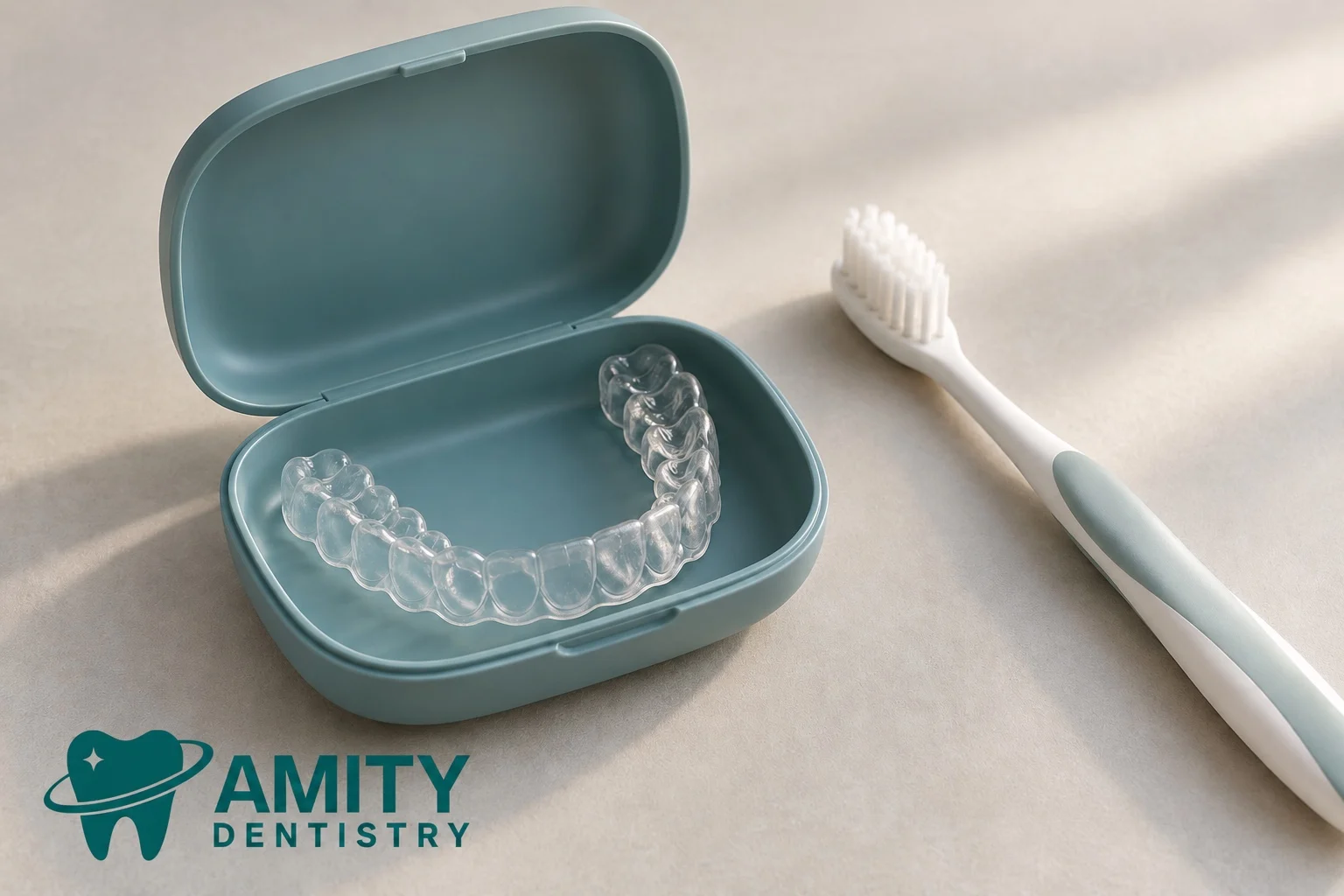
If your retainer is removable, give its case a regular spot where you can reach it easily and pets can’t. A familiar place is especially helpful when you’re tired or in a hurry.
Use the cleaning instructions for your particular retainer. Very hot water and excessive heat can damage some materials, and a protective case is the place to keep it when it’s out of your mouth. AAO retainer care guidance
Think about nights away from home, too. Keep the case and care supplies on your packing list so you have what you need when your usual routine changes.
Call if the fit changes
A retainer that feels a little snug is different from one that won’t seat properly. If it causes significant pain, looks cracked or warped, or needs force to go in, contact the clinician overseeing your care. Don’t heat it or bend it yourself to try to make it fit.
A change in fit may mean your teeth have moved or the retainer has a problem. An assessment can help establish what happened and whether you need an adjustment, a replacement, or another approach. AAO advice about tight or poorly fitting retainers
When you call, mention when you first noticed the change and whether the retainer has been damaged or exposed to heat. That gives the office useful information when explaining what to do next.
Ask about replacement costs before you need one
Check whether your treatment estimate includes the first retainer, follow-up visits, and any replacements. Find out what to do if you lose a retainer while traveling, too.
Having those answers early saves you from sorting them out when something goes missing. Our Invisalign consultation guide includes more questions to take to your first visit.
Include aftercare in your Invisalign conversation
When you’re considering Invisalign, ask about both the treatment and the routine that follows. Knowing what comes next can help you decide whether you’re ready to begin.
Explore Invisalign at Amity Dentistry and request a consultation, or call (980) 423-1244. Our office is in Charlotte, near Pineville. Your examination and treatment plan will guide the care that’s appropriate for you.
Frequently asked questions
How long do I need retainers after Invisalign?
Usually long term. Teeth can keep changing position, so ask your clinician what ongoing wear is appropriate for you. [1]
Do I wear my retainer all day or only at night?
There is no single schedule for everyone. Follow the schedule prescribed for your stage of care and ask before changing it. [2]
Should I force a tight retainer onto my teeth?
Do not force it if it will not fully seat, causes significant pain, or looks damaged. Contact your clinician for an assessment. [4]
Can I clean my retainer with hot water?
Avoid excessive heat, which can distort some materials. Follow the cleaning method recommended for your particular retainer. [3]
What should I do if I lose my retainer?
Contact your treating office promptly for next steps. Ask in advance how replacement works and whether a separate fee applies. [2]
Related reading from Amity Dentistry
- 10 Questions to Ask Your Dentist About Invisalign Treatment — Include retainer costs and aftercare in your treatment questions.
- Invisalign for Busy Adults in Charlotte — Plan habits that can carry from aligner treatment into aftercare.
- How Often Should I Visit the Dentist? — Discuss an ongoing dental visit schedule that fits your oral health needs.
This article provides general information. Follow the wear and care instructions from the clinician overseeing your treatment.