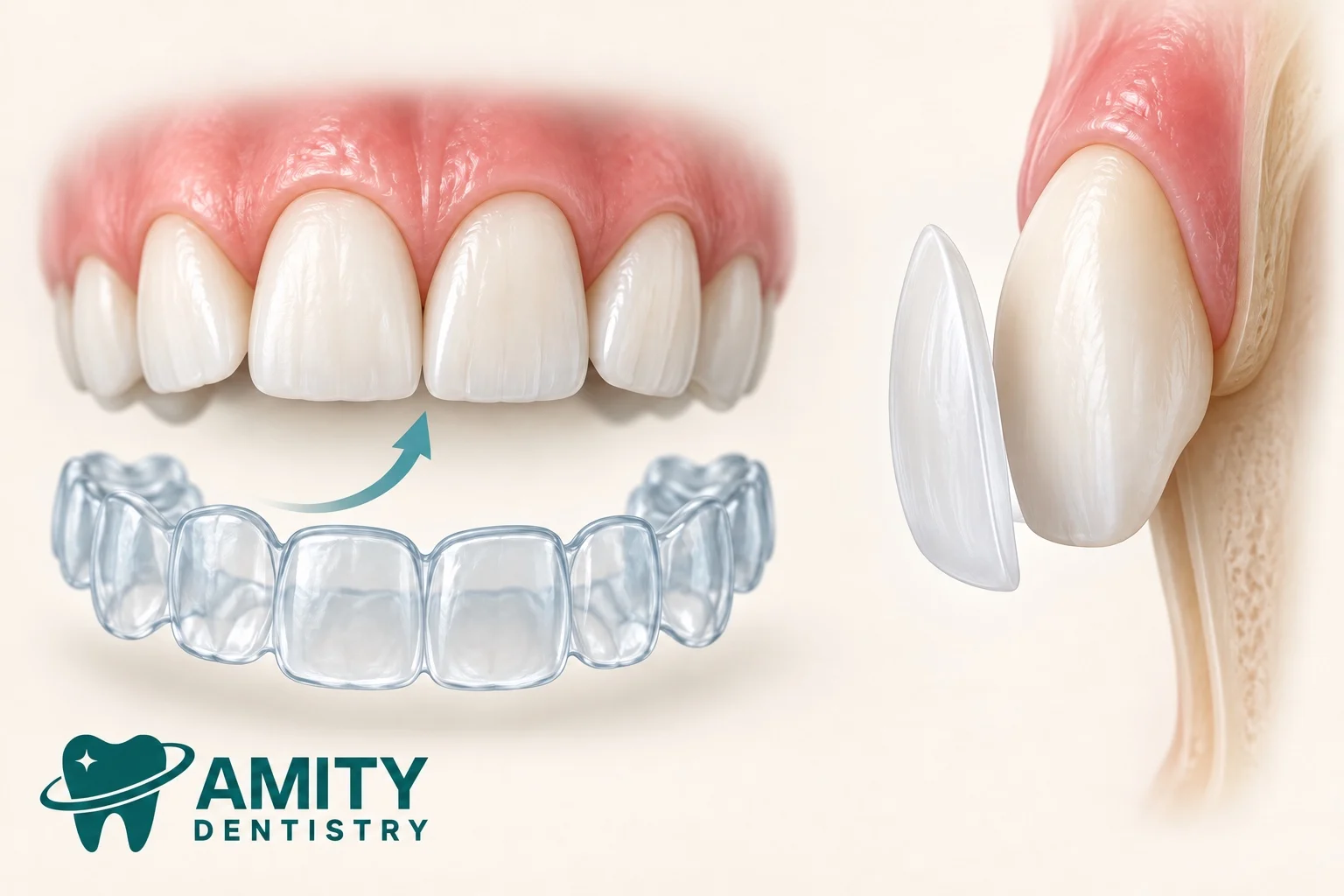
Short answer: Invisalign moves teeth; veneers cover their front surfaces to change appearance. For crooked front teeth, the choice depends on tooth position, bite, tooth health, and your goals. Veneers do not move the teeth, and enamel preparation is irreversible. An examination is needed to compare suitable options. [1] [2]
Maybe one front tooth overlaps the next, or an uneven edge draws your eye in photos. When you start looking for ways to change it, Invisalign and veneers may both come up. The choice starts with understanding what bothers you and what each treatment can actually change.
Orthodontic treatment moves teeth and considers how they meet when you bite. Veneers cover the front surfaces of teeth to change their appearance. Both can be part of a cosmetic discussion, but they do different jobs. ADA orthodontics overview, ADA veneer guidance
Invisalign vs. veneers: what each treatment changes
| Question | Invisalign | Veneers |
|---|---|---|
| What changes? | Tooth position through a planned sequence of aligners. | The visible surface of the treated tooth. |
| What needs evaluation? | The movement required and how the teeth fit together. | The tooth’s health, surface, shape, and bite forces. |
| What is the ongoing commitment? | Prescribed aligner wear, follow-up, and retention. | Care of the teeth and restorations, with possible future repair or replacement. |
A photo can help you explain the overlap you see. It can’t show everything a dentist needs to assess before recommending a treatment.
Consider your bite when treating crooked front teeth
What looks like a small alignment issue may need a closer look at how your teeth fit together. Orthodontic care considers crowding, spacing, and the way upper and lower teeth meet. Aligners and braces move teeth into new positions; retainers help keep them there afterward. ADA explanation of orthodontic treatment
Ask your dentist to show you what happens when you bite. If veneers are being discussed, find out what they would change about the appearance of your teeth and what would stay the same about your bite.
Clear aligners can’t handle every type of movement. More complex bite problems or significant rotations may need another approach, so the conversation should include alternatives when appropriate. AAO clear aligner guidance
Know what preparing a tooth for a veneer involves
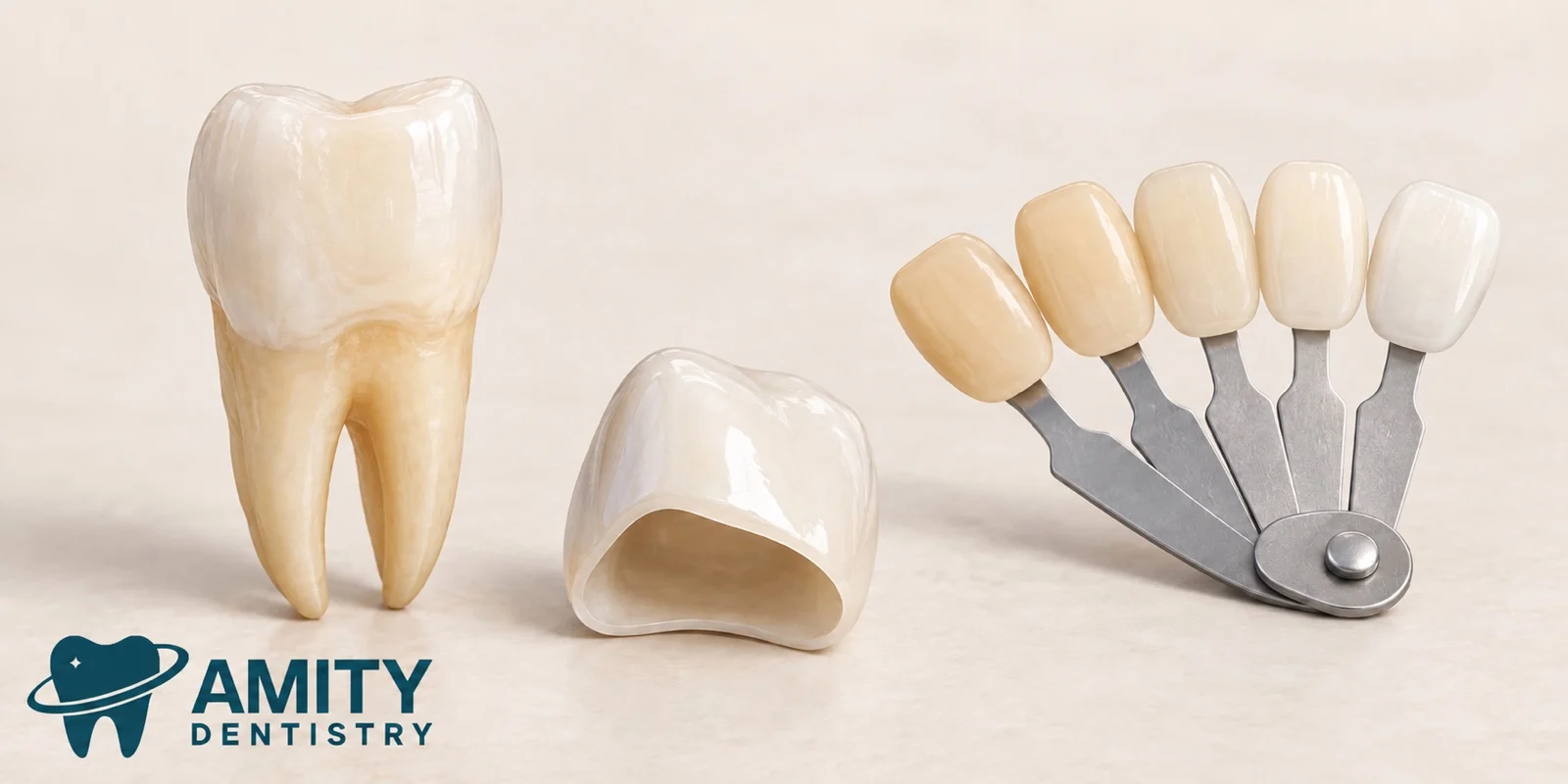
Traditional veneers require some enamel removal to make room for the restoration. That change is irreversible. Veneers may also need repair or replacement over time. Grinding and a deep bite can affect whether they’re suitable, and decay or gum disease needs treatment before veneers are placed. These are details to understand before deciding. ADA veneer guidance
Ask how much preparation is proposed for each tooth and why. The answer may differ from one tooth to the next.
If you’re also considering bonding, our bonding and veneers guide explains how those two ways of changing tooth surfaces compare.
Start with the change you want to see
Try finishing this sentence before your visit: “The thing I would most like to change is…”
You might point to overlapping edges, one tooth that stands out, or a shape you’ve never liked. That gives your dentist a clearer starting point than the name of a procedure alone. Together, you can separate concerns about position from concerns about shape.
Keep these questions handy during the discussion:
- Which concern comes from tooth position, and which comes from shape?
- What would remain unchanged with each option?
- Would any natural tooth structure need to be removed?
- Would you recommend an orthodontic evaluation?
- What maintenance and future costs should I plan for?
- If more than one treatment is suggested, why is that sequence appropriate?
Compare the options against your own teeth and goals. A treatment photo or a short appointment timeline can be appealing, but you’ll also want to understand the effect on your bite, your tooth structure, and the care you’ll need later.
Talk through the options at Amity Dentistry
Amity Dentistry offers Invisalign and cosmetic dental care in Charlotte, near Pineville. You can start the conversation with the part of your smile you’d like to change.
Request a consultation or call (980) 423-1244. An examination can help determine whether straightening, cosmetic treatment, another option, or leaving things as they are makes sense for you.
Frequently asked questions
Do veneers straighten crooked teeth?
Veneers can change the visible shape of treated teeth. They do not move teeth into new positions or replace a needed bite correction. [1]
Is Invisalign always suitable for crooked front teeth?
No. The type of movement and bite problem matter. Some cases need braces or another approach, so an examination comes first. [3]
Are veneers reversible?
Veneer preparation that removes enamel is irreversible. Ask what would be removed from each tooth before agreeing to treatment. [2]
Will I need a retainer after Invisalign?
Retention helps preserve the positions achieved with orthodontic treatment. Your treating clinician should prescribe your retainer and wear schedule. [1]
How do I compare the long-term commitment?
Ask about aligner wear, retention, and follow-up for Invisalign, and tooth preparation, maintenance, and possible repair or replacement for veneers. [2]
Related reading from Amity Dentistry
- Dental Bonding vs. Porcelain Veneers — Compare veneers with another way to change the surface of a tooth.
- 10 Questions to Ask Your Dentist About Invisalign Treatment — Prepare questions for an Invisalign consultation.
- Invisalign for Busy Adults in Charlotte — Consider how daily aligner wear could fit your routine.
This article provides general information. Your dentist can recommend care based on an examination and your individual needs.