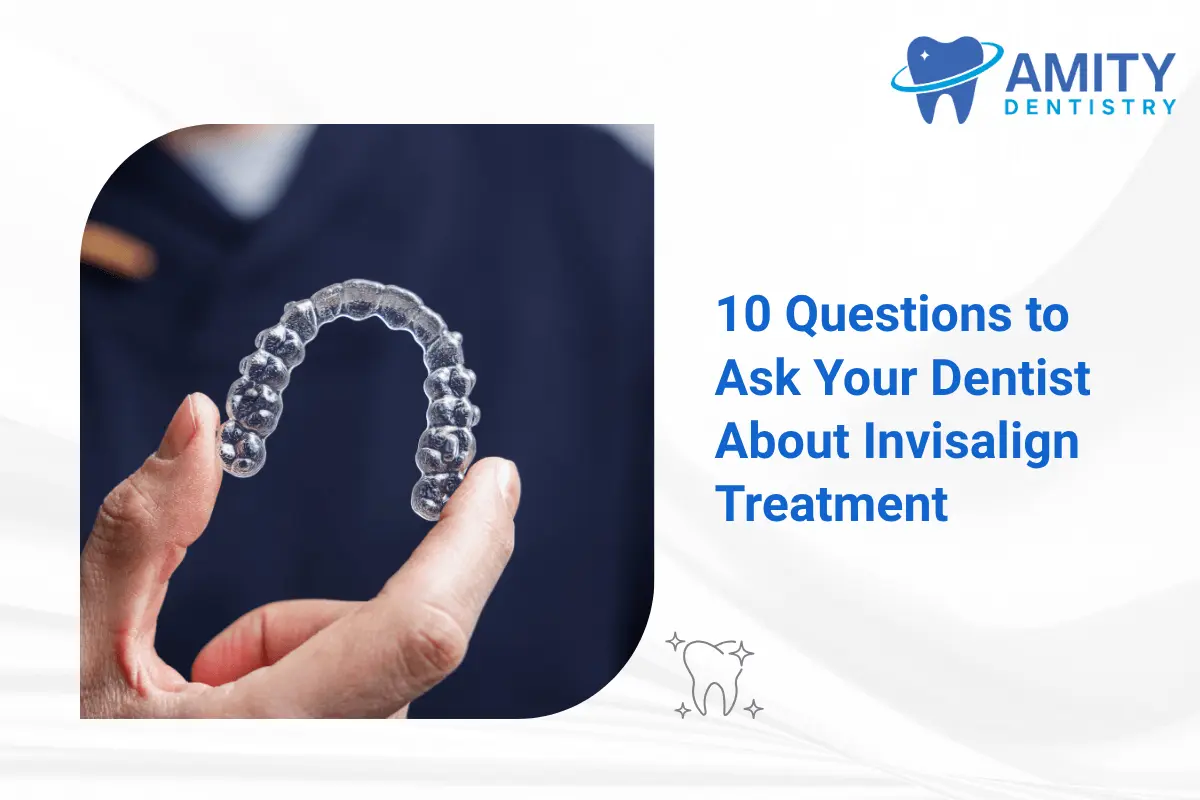
Thinking about straightening your teeth without traditional braces? Invisalign has become one of the most popular options for adults and teens who want a straighter smile without metal wires and brackets. But before you commit, it helps to walk into your consultation prepared.
Knowing what to ask ahead of time makes the whole process smoother. It also helps you figure out if Invisalign is actually the right fit for your teeth, your lifestyle, and your budget. Here’s a full breakdown of what to expect and what to ask during your Invisalign consultation.
Quick Summary
- An Invisalign consultation includes a dental exam, digital scans, bite assessment, and personalized treatment discussion.
- Ask about your eligibility, treatment timeline, total cost, insurance coverage, and expected results.
- Invisalign works best for mild to moderate crowding, spacing, and bite issues.
- Aligners should be worn 20–22 hours per day for the best outcome.
- Most patients experience a short adjustment period with speech before returning to normal within a few days.
- Regular checkups every 6–8 weeks help ensure your treatment stays on track.
What Happens at an Invisalign Consultation?
Your first Invisalign appointment is mostly about figuring out whether the treatment will work for you. Here’s what usually happens:
- Dental exam. The dentist checks your teeth, gums, and bite to see if there are any issues that need to be addressed first, like cavities or gum disease.
- X-rays and scans. Digital scans or X-rays give the dentist a clear picture of your teeth and jaw structure.
- 3D imaging. Many offices use digital scanning technology to create a 3D model of your mouth. This also lets you see a preview of your projected results.
- Treatment discussion. The dentist walks you through how long treatment might take, what to expect, and answers any questions you bring up.
This appointment usually takes 30 to 60 minutes. It’s a good idea to come with a list of questions so you don’t forget anything once you’re in the chair.
Is Invisalign Right for Me?
Not everyone is a good candidate for Invisalign, and that’s exactly what this consultation is meant to figure out. A few things that affect eligibility:
- Severity of misalignment. Invisalign works well for mild to moderate crowding, gaps, and bite issues. Severe cases sometimes still need traditional braces.
- Oral health. Active cavities or gum disease usually need to be treated before starting Invisalign.
- Commitment level. Invisalign only works if you wear the aligners 20 to 22 hours a day. If you know you won’t be consistent, that’s worth discussing with your dentist.
- Age and jaw development. Invisalign is generally recommended once most or all permanent teeth have come in.
Ask your dentist directly whether your case is a good match. A straightforward answer here saves you time and money down the line.
10 Questions to Ask Your Dentist About Invisalign Treatment
Here are the most useful questions to bring to your consultation:
- Am I a good candidate for Invisalign? Get a clear answer based on your specific bite and alignment issues, not just a general yes or no.
- How long will my treatment take? Treatment time varies widely, from six months for minor corrections to two years or more for complex cases.
- How many aligners will I need? This gives you a sense of the total treatment plan and how often you’ll be switching trays.
- How often do I need checkup appointments? Most patients come in every six to eight weeks to track progress.
- What happens if I lose or damage an aligner? Ask about replacement costs and how quickly a new one can be made.
- Will I need attachments or buttons on my teeth? Small tooth colored attachments are sometimes added to help the aligners grip certain teeth. Ask if your treatment plan requires them.
- What’s the total cost, and does insurance cover it? Get a clear number, including whether payment plans are available.
- What happens after treatment ends? Ask about retainers and how to maintain your results long-term.
- Can I still eat and drink normally? Aligners need to come out for eating and drinking anything besides water, so ask how this fits into your daily routine.
- What if my teeth shift back after treatment? Understand the relapse risk and what your dentist recommends to prevent it.
Bringing a written list like this to your appointment makes sure nothing gets missed, especially if you’re nervous or the visit feels rushed.
Is It Hard to Talk With Invisalign?
This is one of the most common concerns people have before starting treatment. The honest answer is that most people notice a slight lisp or change in speech during the first few days, but it usually goes away quickly.
Here’s what to expect:
- The first week is the biggest adjustment period. Your tongue and mouth need time to get used to the thin plastic aligners.
- Certain sounds may feel different at first, especially “S” and “T” sounds, since the aligners sit close to where your tongue touches your teeth.
- Most people adjust within three to seven days. Speech typically returns to normal as your mouth adapts.
- Practicing helps. Reading out loud for a few minutes a day during the first week can speed up the adjustment.
- It gets easier with each new set of aligners. Many people find that switching to a new tray becomes less noticeable over time as they get used to the sensation overall.
If speech issues are a big concern for you, mention this during your consultation. Your dentist can walk you through what to expect based on your specific treatment plan.
What to Expect at Your Invisalign Appointments
Once treatment starts, your appointments become part of a regular routine. Here’s a general idea of what ongoing visits look like:
- Frequency. Checkups are usually scheduled every six to eight weeks.
- Length. These visits are short, often 15 to 20 minutes, since the dentist is mainly checking progress and handing you your next set of aligners.
- What gets checked. The dentist looks at how well your teeth are tracking with the treatment plan and makes sure the aligners fit properly.
- Adjustments if needed. If your teeth aren’t moving as expected, your dentist might recommend refinement aligners partway through treatment.
Compared to traditional braces, Invisalign appointments tend to be quicker and less frequent, which is one of the reasons many adults prefer it.
Comparison between Braces and Invisalign
Finding Invisalign Support in Charlotte
If you’re in the Charlotte area and considering Invisalign, choosing a dentist with real experience in clear aligner treatment matters. Look for a few things when researching your options:
- Experience with Invisalign specifically, not just general orthodontic work.
- Before and after photos of real patients, so you can see actual results rather than stock images.
- Clear pricing and payment options, including whether they offer financing or payment plans.
- A consultation that answers your questions directly, without pressuring you into a decision on the spot.
A good Invisalign provider should make you feel informed, not rushed. Take the time to compare a couple of consultations if you’re unsure.
Get Invisalign In Pineville, Charlotte NC at Amity Dentistry
Start Your Invisalign Journey with Amity Dentistry
Choosing Invisalign is an investment in your smile, and having the right information from the beginning makes all the difference. At Amity Dentistry, we’ll evaluate your teeth, answer your questions, and create a personalized Invisalign treatment plan that fits your goals, lifestyle, and budget.
Schedule your Invisalign consultation with Amity Dentistry today and discover whether clear aligners are the right solution for achieving a healthier, more confident smile.