A filling may be suitable when a tooth has a cavity or damaged area that can be repaired while keeping enough supporting tooth. A crown covers a tooth that needs more protection because it is weak or extensively damaged. Your dentist considers the remaining tooth, existing restorations, and examination findings—not simply whether it hurts.
What is the difference between a filling and a crown?
A filling replaces a missing portion of tooth after decay is removed. The National Institute of Dental and Craniofacial Research explains that dentists use fillings to repair cavities and crowns for more badly broken-down teeth.
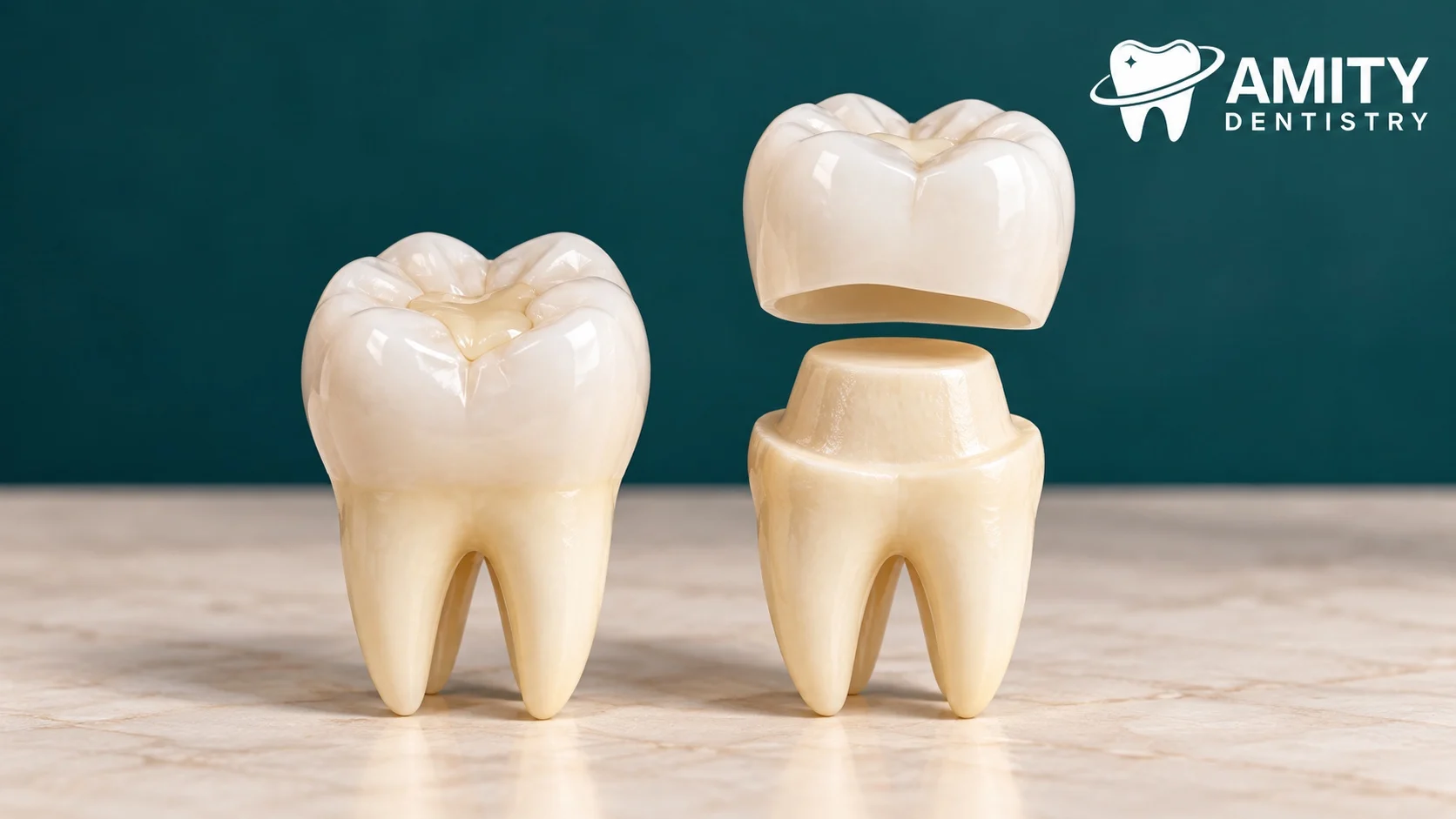
A crown fits over the prepared tooth. The American Dental Association identifies several reasons it may be recommended: protecting a weak tooth, restoring a broken tooth, or supporting a tooth with a large filling when too little natural tooth remains.
Neither option is automatically better. The question is which repair makes sense for the tooth you have now.
Why might another filling be insufficient?
If you have had the same tooth filled before, it is reasonable to ask why the dentist is proposing something different. A new recommendation deserves an explanation you can understand.
Ask the dentist to show you the area on a photograph, mirror view, or X-ray when available. Useful questions include:
- How much sound tooth is left after the damaged area is addressed?
- What would hold another filling in place?
- Is there a crack or a weakened section that changes the recommendation?
- Are there alternatives, and what are their limitations?
You do not need to become an expert in dental materials. You should be able to describe the problem and the purpose of the proposed repair in your own words before deciding.
Does a tooth need treatment if it does not hurt?
Pain is useful information, but it is not a complete test of tooth health. NIDCR notes that early decay often has no symptoms. A dentist may find a problem during an examination before you notice discomfort.
If a recommendation surprises you, ask what the findings show and how urgent the situation is. “Can you explain what you are seeing?” is a helpful starting point. A second opinion is also an option when you want more clarity about a substantial treatment decision.
What should you ask about cost and next steps?
Request an estimate for the proposed treatment, including any separate steps, and ask the team to check your exact insurance plan. A treatment recommendation and a coverage decision answer different questions. Neither a carrier name nor a familiar procedure guarantees a particular benefit.
Before leaving, confirm which tooth is being treated, what the next appointment involves, and whom to call if symptoms change. Tell the team if you are worried about comfort, scheduling, or understanding the estimate. Those concerns belong in the conversation.
Frequently asked questions
Does a large filling always mean I need a crown?
No. The amount and condition of the remaining tooth matter. Ask why a crown is being recommended for your particular tooth rather than relying on filling size alone.
Will a crown last forever?
No restoration comes with a lifetime guarantee. NIDCR explains that fillings and crowns may eventually need replacement. Ask how to care for the proposed restoration and what follow-up is recommended.
Can a crown fix a tooth that needs a root canal?
A crown and root-canal treatment address different problems. Root-canal treatment may be needed when the tissue inside a tooth is inflamed or infected; an appropriate restoration then protects the tooth. An examination determines which steps apply.
Can I wait until my tooth starts hurting?
Do not use pain as your only guide. Ask your dentist about the likely consequences of waiting and the recommended timeframe based on the findings. Report new symptoms rather than waiting for the next routine visit.
Can I choose the treatment after discussing it?
Yes. Ask about suitable options, benefits, limits, costs, and what happens without treatment. The dentist can explain which choices are clinically appropriate; the discussion should leave room for your questions.
Talk through your options in South Charlotte
Amity Dentistry provides fillings and crowns on Pineville-Matthews Road in South Charlotte. Call (980) 423-1244 or request an appointment to have your tooth evaluated. The team will confirm availability and the next step.
For related reading, learn why a tooth may hurt when biting down, how whitening affects fillings and crowns, and how to discuss dental anxiety with your dentist.
This article provides general information. A dental examination is needed for an individual diagnosis and treatment recommendation.