New full dentures can feel bulky, and eating or speaking may take practice. Extra saliva and minor irritation can occur while you get used to them, but persistent soreness, slipping, or trouble using the dentures calls for a dental review. Follow the instructions for your appliance, and have a professional assess fit problems instead of changing the denture yourself.
What can feel different with new full dentures?
A full denture replaces the teeth in an upper or lower arch. Your cheeks, lips, and tongue need to become familiar with its shape. The American Dental Association’s patient guidance describes temporary awkwardness, minor irritation, and increased saliva during this adjustment period.
An unfamiliar sensation is different from a problem that prevents you from eating, speaking, or wearing the appliance comfortably. Keep the planned fit check and describe what happens during everyday activities. For example, tell the team if a particular edge rubs or the denture lifts during a meal. These observations help the dentist assess what needs attention.
Make eating easier while you adjust
Begin with softer foods in small pieces, chew slowly, and increase the variety as you become comfortable and your clinician advises. Cambridge University Hospitals recommends chewing on both sides to help reduce tipping. Biting into food with the front teeth can rock the denture.
Allow yourself time for a meal. If one food or movement repeatedly causes difficulty, note it for the review. That is more useful than trying to solve every slip with extra adhesive.
Contact the treating team if pain or movement keeps you from eating or drinking adequately. You do not need to wait for a routine follow-up to report a problem that is interfering with daily life.
Give speech some low-pressure practice
Some sounds may feel different at first. Cambridge University Hospitals suggests reading aloud to help you practice speaking with the denture. A short passage at home gives you a chance to notice which words are difficult without feeling rushed.
Tell the dentist about clicking or movement while talking, particularly if it continues. Practice can help you become familiar with the appliance; repeated movement still deserves a fit assessment.
Clean the denture and care for your mouth
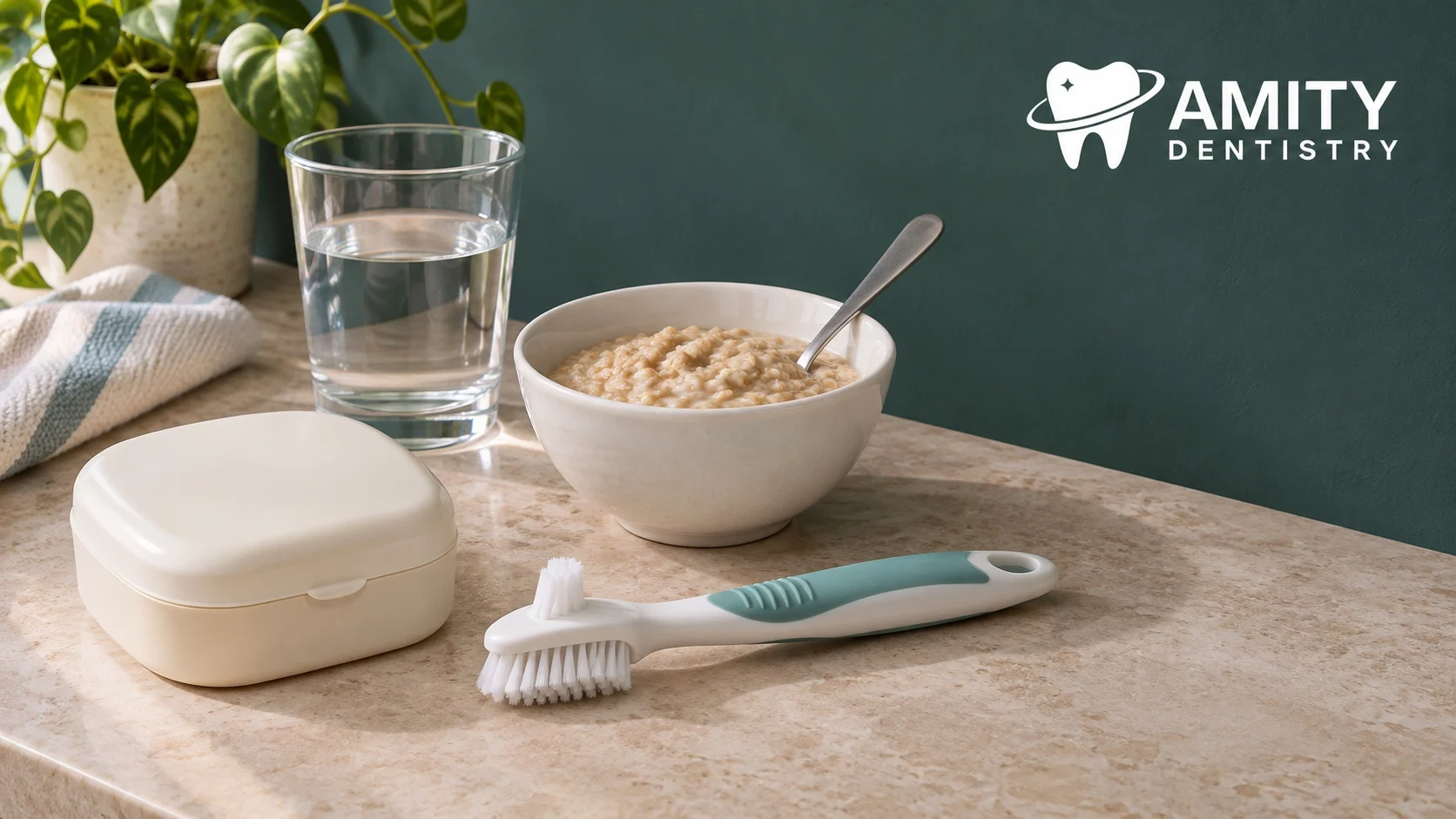
Daily cleaning matters even when there are no natural teeth left. Use a soft denture brush or soft toothbrush and the nonabrasive cleaning product recommended for your appliance. Follow the product’s directions, rinse thoroughly, and use denture cleansers outside your mouth. The ADA’s maintenance guidance explains these precautions.
Avoid hot or boiling water because it can warp dentures. Clean the appliance over a water-filled basin or a folded towel to reduce the chance of breakage if it slips from your hands. Gently clean your gums and tongue, too.
Ask how to store your particular denture when it is out. Cleaning solutions, soaking times, and storage instructions should fit its materials. Get written advice about wear and removal if your denture was fitted as part of another procedure.
When soreness or slipping needs attention
The NHS advises seeing a dentist when dentures cause pain, slip, click during speech, or become worn or damaged. Very red or bleeding tissues also need assessment. Call about ongoing rubbing or a sore area rather than assuming you must push through it.
A mouth sore that remains after two weeks needs review, according to NSW Health’s denture guidance. Seek advice sooner for significant pain or difficulty eating; the two-week point is not a reason to delay those concerns.
Do not file, bend, glue, or otherwise alter the appliance yourself. Adhesive does not repair poor fit. A dentist can assess whether an adjustment, reline, or replacement is appropriate. Bring your dentures and any broken pieces to the appointment, and ask whether to wear them beforehand if your mouth is sore.
Frequently asked questions
How long does it take to get used to full dentures?
The ADA describes an adjustment period that can last weeks, but experiences vary. Follow-up appointments help assess comfort and fit. Report persistent irritation or difficulty using the dentures instead of treating a particular day as a deadline for improvement.
Should I sleep in my new dentures?
Dentures are generally removed for sleep unless the dentist recommends otherwise. Follow the instructions you were given, especially after a procedure. If the directions are unclear, ask the treating team before changing your wear schedule.
Can I clean dentures with ordinary toothpaste?
Some toothpastes are abrasive and can scratch the appliance. Use the cleaning product recommended for your denture and follow its instructions. Care for the tissues in your mouth separately as directed.
Will more adhesive stop a loose denture from moving?
Adhesive is not a remedy for an ill-fitting denture. Ask the dentist to check the fit rather than increasing the amount on your own. The team can explain whether an adhesive is appropriate and how to use it.
Do I still need dental visits if I have no natural teeth?
Yes. The dentist checks your mouth’s tissues as well as the fit and condition of the appliance. Ask which review schedule is appropriate for your needs, and contact the office sooner if problems arise.
Discuss denture comfort in South Charlotte
Amity Dentistry offers full and partial dentures at our Pineville-Matthews Road office in South Charlotte. Call (980) 423-1244 or request an appointment to discuss comfort, fit, or a replacement evaluation. The team will confirm availability. If a new appliance was fitted elsewhere, contact the treating clinician about immediate aftercare concerns.
Related reading
- Questions about denture fit and follow-up
- How to discuss anxiety before a dental visit
- Returning to dental care after a long gap
This article provides general education. Your dentist’s instructions and an individual examination guide your care.
Sources
- American Dental Association, MouthHealthy: Dentures.
- American Dental Association: Denture Care and Maintenance.
- Cambridge University Hospitals: Denture care: Looking after your dentures.
- NHS: Dentures (false teeth).
- NSW Health: What can I expect when I get my dentures?.