Wisdom tooth extraction is common, but proper aftercare makes all the difference in your recovery. This guide provides the needed steps to heal quickly and avoid complications.
You’ll find practical advice on:
- The critical first 24 hours: protecting the blood clot, managing swelling, and choosing safe foods
- Pain management strategies: medications, salt water rinses, and natural relief methods
- Proper cleaning techniques that won’t disrupt healing
- Habits to avoid during recovery like smoking, alcohol, and using straws
- Warning signs that require immediate dental attention
Whether you’re preparing for surgery or currently recovering, these aftercare tips will help you navigate the healing process with confidence.
Since the pain can last for a certain period, the journey to a full and comfortable recovery depends almost entirely on the care you provide yourself in the days that follow.
Therefore, to make the recovery step even smoother, we’ll point out and explain some tooth extraction aftercare tips for wisdom tooth pain. So, let’s get.
What is Wisdom Tooth Extraction?
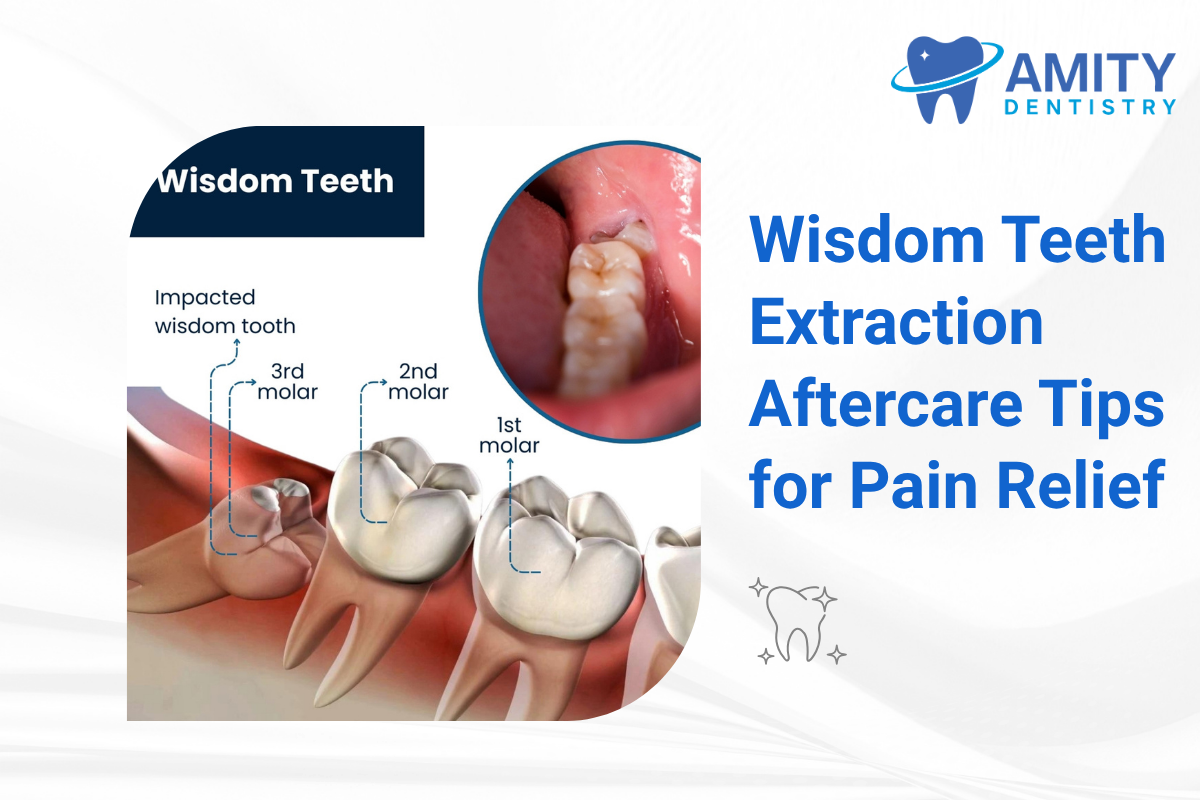
Wisdom tooth, also known as third molars, are the last set of molars to come in the back of your mouth, typically between the ages of 17 and 25.
For many people, there isn’t enough room in the jaw for these tooth to come in properly. When this happens, they can become impacted, meaning they get stuck beneath the gum line or against other teeth. This can lead to lots of problems, including pain, infection, and damage to surrounding tooth.
Wisdom tooth removal is a common surgical procedure performed by a dentist or oral surgeon to extract these molars. The procedure is usually done under local anesthesia, which numbs the area, or with sedation, which helps you relax or even sleep through the surgery.
Wisdom Tooth Extraction Aftercare Tips for the First 24 Hours
After a tooth extraction, your top priority is protecting the blood clot that forms in the socket. Dislodging it causes dry socket which can be a painful complication that delays healing. Here are proper wisdom tooth extraction aftercare tips for the first 24 hours:
1. Gentle Biting on Gauze
After your surgery, your dentist will place a sterile gauze pad over the extraction site. It’s essential to bite down gently but firmly on this gauze for about 30 to 45 minutes to help form a blood clot. This clot is your body’s natural bandage and is crucial for healing. If the bleeding continues, you can replace the gauze with a fresh one and repeat the process. Avoid chewing or talking excessively during this time,
as it can dislodge the clot.
2. Using Ice Packs for Swelling
Swelling is a natural part of the healing process, and it usually peaks 48 to 72 hours after surgery. To minimize swelling and discomfort, apply an ice pack to the outside of your cheek, near the extraction site. Use the ice pack for 10-20 minutes at a time, with breaks in between. Start this immediately after the surgery and continue for the first 24 hours. The cold helps constrict blood vessels, reducing swelling and
providing a numbing effect.
3. Rest and Elevate Your Head
Rest is vital for your body to heal. It’s recommended to take it easy for the first 24 hours and avoid any strenuous physical activity, which can increase blood pressure and lead to more bleeding. When you lie down, keep your head elevated with pillows. This helps to reduce swelling and bleeding. Lying flat can increase blood flow to the head and neck area, which can hinder the formation of a stable blood clot.
4. Staying Hydrated
Drinking plenty of fluids is important for your overall health and helps with recovery. Stick to cool, non-carbonated drinks like water and fruit juice. Avoid using a straw for at least the first few days, as the sucking motion can dislodge the blood clot and lead to a dry socket. Sip your drinks from a glass instead.
5. Soft Food Diet
For the first day, it’s crucial to stick to a diet of soft foods that don’t require much chewing. This prevents food particles from getting into the extraction site and causing irritation or infection. Good options include soup, yogurt, applesauce, mashed potatoes, and smoothies. As you start to feel better, you can gradually introduce more solid foods, but listen to your body and avoid anything that causes pain or discomfort.
What is a Wisdom Tooth Pain?
The reason wisdom tooth are often a source of discomfort is their timing and placement. They emerge at a time when your jaw has finished growing, leaving little to no space for them. This lack of space can cause them to grow in at odd angles, pressing against other teeth and leading to a condition called impaction. An impacted wisdom tooth can cause pain, swelling, and damage to adjacent tooth, therefor, creating what’s known as the wisdom tooth pain.
Furthermore, even if they come without becoming impacted, their position at the very back of the mouth makes them difficult to clean. This can lead to food and bacteria getting trapped, increasing the risk of cavities and gum disease.
The combination of pressure from impaction and the potential for infection is what makes wisdom tooth a frequent source of significant pain and the most common reason they need to be extracted.
Why Wisdom Tooth Extraction After Care Matters?
Wisdom tooth extraction is a surgical procedure to remove one or more of these troublesome molars. After the tooth is pulled, a protective blood clot forms in the empty socket. This clot is a critical component of the healing process as it acts as a natural bandage, protecting the exposed bone and nerves underneath and serving as the foundation for new tissue growth.
Tooth extraction after care is important because it is all about protecting this blood clot. If the clot is dislodged or dissolves too soon, it leaves the socket exposed to air, food, and bacteria.
This can lead to a very painful condition called “dry socket,” which significantly delays healing and increases discomfort. Proper aftercare ensures the clot stays in place, minimizing your wisdom tooth pain and promoting a fast, successful recovery.
Days 2–4: Wisdom Tooth Extraction Pain Management and Eating
Even after the first 24 hours, the pain is likely to still be there. Therefore, you must take the right pain management tips in the first days.
1. Taking Prescribed Pain Medication
Your dentist or oral surgeon will likely prescribe pain medication to help manage the discomfort after the surgery. It’s important to take this medication as directed, usually before the local anesthetic completely wears off, to stay ahead of the pain. Don’t wait for the pain to become severe before taking a dose. Always follow the prescribed dosage and frequency, and never take more than recommended. Always
listen to experts like Amity Dentistry and take the prescribed pain medication.
2. Over-the-Counter Pain Relievers
For milder pain, or after you’ve finished your prescription medication, over-the counter pain relievers like ibuprofen (Advil, Motrin) or acetaminophen (Tylenol) can be very effective. Ibuprofen also has anti-inflammatory properties, which can help reduce swelling. Be sure to check with your dentist or pharmacist about which option is best for you and if it can be taken with your other medications.
3. Warm Salt Water Rinses
After the first 24 hours, you can start rinsing your mouth with a warm salt water solution. This helps to keep the area clean and promotes healing. Dissolve half a teaspoon of salt in a cup of warm water and gently swish it around your mouth, letting it flow over the extraction site. Do this several times a day, especially after meals, but be careful not to spit forcefully, as this could dislodge the blood clot.
4. Avoiding Hard and Crunchy Foods
Even as you feel better, it’s important to continue with a soft food diet for several days. Hard, crunchy, or chewy foods can irritate the wound and get stuck in the socket, leading to pain and infection. Foods like nuts, popcorn, chips, and tough meats should be avoided until the extraction site has healed sufficiently. Slowly introduce these foods back into your diet as your comfort level allows.
5. Gentle Oral Hygiene
While it’s important to keep your mouth clean, you must be very gentle around the surgical site. For the first 24 hours, avoid brushing or rinsing near the extraction area. After that, you can carefully brush your other teeth, but be sure to avoid the wound. The salt water rinses will help with the cleaning of the wound itself, so there’s no need to force a toothbrush into that area.
Dental Guide: Worst Day of Pain After Wisdom Tooth Extraction
Monitoring for Possible TMJ Symptoms after Healing Period
While some jaw soreness is normal after extraction, pay attention to persistent clicking, popping, or pain when opening your mouth. If these symptoms continue beyond the normal healing period (2-3 weeks), they may indicate TMJ disorder rather than extraction-related discomfort. Teeth grinding or clenching during recovery can also trigger TMJ issues. Consult with a dentist to conform the situation with a dental appointment. Symptoms can be shared over phone calls before reserving an appointment to make sure the treatment procedure is smooth.
Cleaning and Hygiene Tips to Prevent Infection
Cleanliness is crucial, but gentle care is the key when it comes to the aftercare of wisdom tooth extraction:
- Salt Water Rinse: After 24 hours, rinse your mouth gently with warm salt water a few times a day. It helps keep the area clean.
- Brush Carefully: Avoid brushing the extraction site for a few days, but do brush the rest of your teeth gently.
- Don’t Poke the Area: Avoid touching the wound with your fingers or tongue as it can cause irritation or infection.
- Skip Mouthwash: Strong alcohol-based mouthwashes can harm the healing tissue. Stick with salt water unless otherwise advised.
At Amity Dentistry, we show patients exactly how to clean their mouth safely without disrupting healing. So, you can always count on us for proper care and tips.
What to Avoid After Tooth Extraction
Certain habits can delay your recovery or cause complications. Here’s a list of things to avoid during wisdom tooth extraction recovery:
- Smoking or Vaping: These habits interfere with your body’s ability to heal and can triple your risk of developing a painful dry socket.
- Alcohol: It can irritate the sensitive tissue in your mouth and may interfere with your pain medications, making them less effective.
- Using Straws: The suction created by a straw can pull the protective blood clot right out of the socket, which stalls the healing process.
- Vigorous Exercise: For the first 48–72 hours, heavy activity can raise your blood pressure, leading to increased bleeding, swelling, and pain.
- Spitting Forcefully: Much like using a straw, the pressure from spitting can dislodge the clot that is necessary for your gums to close up.
- Hot Liquids: During the first 24 hours, high temperatures can dissolve the forming clot or cause the surgical site to bleed more.
- Touching the Socket: Poking the area with your tongue or fingers introduces bacteria and can accidentally disturb the healing tissue.
- Hard or Crunchy Foods: For the first 5–7 days, these can poke the wound or get stuck in the socket, causing irritation or infection.
- Jaw Clenching or Grinding: Stress during recovery can cause unconscious teeth grinding, which may lead to TMJ problems down the line.
Complete Dental Guide: When and What to Eat After Wisdom Teeth Removal
Signs of Dry Socket and Infection: When to Call Your Dentist
Dry socket occurs when the blood clot in the extraction socket is dislodged or fails to form. While most wisdom tooth extractions heal smoothly, there are times you should get in touch with your dentist for potential infection or a dry socket condition. Here are some cues you should not ignore:
- Pain that gets worse after three days
- Bleeding that doesn’t stop
- Signs of infection (fever, foul odor, pus)
- Persistent jaw clicking, popping, or locking after initial healing period
- Swelling that worsens instead of improving
- Trouble swallowing or breathing
If you notice any of these symptoms, call your dental office right away. At our local family dentistry in Charlotte, we provide emergency appointments for all dental care practices. Patients can reach us quickly, and we prioritize post extraction concerns with same-day appointments when needed.
Conclusion: Wisdom Tooth Extraction Aftercare
While the recovery process for a wisdom teeth extraction requires a bit of patience and careful attention, following these aftercare tips will set you up for success. By properly managing your pain, staying on top of hygiene, and giving your body the rest it needs, you can ensure a smooth and healing period.
If you have any questions or concerns during your recovery, don’t hesitate to reach out to a trusted professional. Our team at Amity Dentist in Pineville, Charlotte is dedicated to providing expert care and support every step of the way, helping you navigate your recovery with confidence. Want a confident smile? Our team offers professional dental solutions. Call 980-423-1244 or Book Now.