Wisdom tooth extraction leaves a wound in the jaw that heals in stages over several days. What you eat, when can you eat after wisdom teeth removal and how you manage the extraction site during meals directly affect how quickly that healing progresses and whether complications like dry socket develop. The timeline is not arbitrary. It follows the biology of clot formation, tissue repair, and bone remodelling, and the dietary restrictions map onto each stage of that process.
The Recovery Timeline Most Patients Don’t Exp
- The first 24 hours after wisdom teeth removal focus on protecting the blood clot that allows the socket to heal properly
- Soft foods like yoghurt, mashed potatoes, eggs, smoothies without straws, and soup are safest during the first week
- Most patients gradually return to normal eating between day 7 and day 14 depending on swelling and healing progress
- Straws, smoking, crunchy foods, hot drinks, alcohol, and popcorn significantly increase dry socket and irritation risk
- Amity Dentistry in Pineville provides wisdom tooth extraction care and recovery support throughout the healing proce
The First 24 Hours: What Is Actually Happening
In the first 24 hours after extraction, the primary objective is blood clot formation in the socket. The clot is the biological foundation of healing. It protects the exposed bone and nerve endings, provides the scaffold for new tissue growth, and keeps bacteria out of the wound.
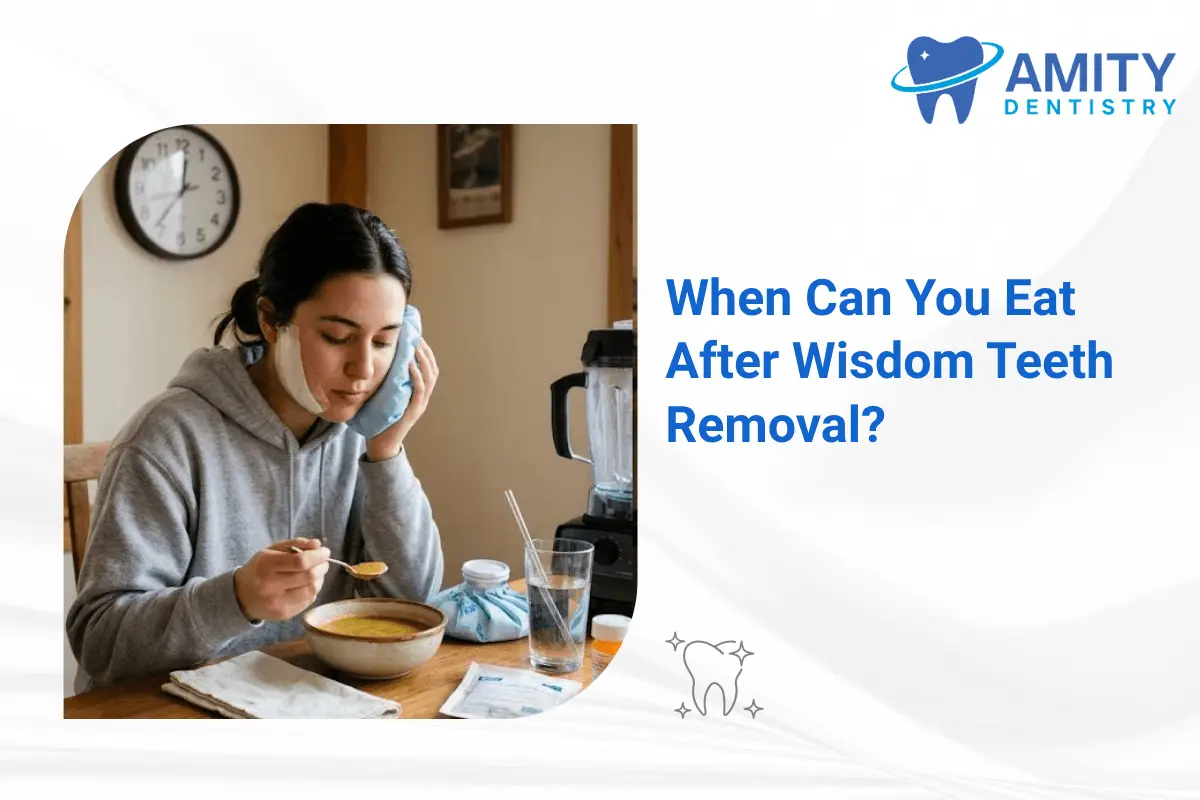
During this window, eat only cold or room-temperature liquids and soft foods that require no chewing. The suction created by drinking through a straw, the heat from warm foods, and the mechanical pressure of chewing can all dislodge the clot before it stabilises.
What you can eat in the first 24 hours:
- Cold water and cold drinks without straws
- Ice cream and frozen yoghurt, plain without chunks or cones
- Cold smoothies drunk from a glass or spoon, no straw
- Yoghurt
- Applesauce
- Pudding and custard
- Cold broth can be consumed by sipping directly from a cup
Avoid using a straw under any circumstances during the first 24 hours. The suction pressure is enough to pull the clot from the socket, causing a dry socket, which is significantly more painful than the extraction itself and requires a return visit to manage.
Days 2 to 3: Soft Foods Only
By day two, the clot has stabilised enough that soft foods requiring minimal chewing become manageable on the opposite side of the mouth from the extraction site. Swelling typically peaks at 48 to 72 hours, which affects how wide you can open your mouth and how comfortable chewing feels.
Foods to eat after wisdom teeth surgery on days 2 to 3:
- Scrambled eggs, cooked soft
- Mashed potatoes without skins or lumps
- Soft-cooked oatmeal at room temperature
- Banana mashed or eaten in very small pieces
- Avocado
- Hummus
- Soft tofu
- Blended soups and broths, lukewarm, not hot
- Greek yoghurt
- Cottage cheese
- Soft-cooked pasta or noodles cut into small pieces
Chew exclusively on the side of the mouth away from the extraction site. Avoid foods that require jaw pressure, that have seeds or small particles that can enter the socket, or that are served hot.
Days 4 to 7: Expanding the Diet
By day four, swelling begins to reduce for most patients, and the initial soft tissue healing over the socket is progressing. The diet can expand to include foods with more texture that still do not require significant biting force or jaw opening.
Things you can eat after wisdom teeth removal from day 4:
- Soft-cooked fish, flaked
- Scrambled or soft-boiled eggs
- Soft-cooked vegetables such as carrots, zucchini, and sweet potatoes
- Rice, well-cooked
- Soft bread without crusts
- Pancakes
- Soft cheese
- Ripe melon
- Soft-cooked beans and lentils
- Protein shakes consumed without a straw
Continue avoiding hard, crunchy, or chewy foods. The socket is still healing, and small food particles entering it cause irritation and an infection risk.
When Can You Eat Normal Food After Wisdom teeth Extraction?
Most patients return to a near-normal diet between day 7 and day 14, depending on how the healing progresses and whether any complications occurred. Harder foods like raw vegetables, tough meat, and anything requiring significant biting force should wait until the socket has visibly closed and tenderness has resolved.
The general timeline:
- Day 1: Liquids and cold soft foods only
- Days 2 to 3: Soft foods requiring minimal chewing
- Days 4 to 7: Expanding soft diet with more texture
- Day 7 onwards: Gradual return to normal foods as comfort allows
- Day 14: Most patients tolerate a normal diet
If you had lower wisdom teeth removed, the healing timeline tends to be longer than upper extractions because the lower jaw has denser bone and the surgical access is more involved. If sutures were placed, your dentist will advise on when they dissolve or need removal, which coincides roughly with the point at which normal eating resumes.
Wisdom Teeth Extraction Aftercare Tips and Dental Practices
Foods to Avoid After Wisdom Teeth Removal
Certain foods create specific risks during the healing period that go beyond general discomfort.
- Hard foods: nuts, chips, crackers, raw carrots, hard candy. These can fracture the clot or impact the socket.
- Crunchy foods: popcorn is the most commonly cited problem food. Hulls and fragments enter the socket and are difficult to remove.
- Chewy foods: tough meat, chewy bread, gummy lollies. These require jaw movement that stresses the extraction site.
- Spicy foods: irritate the healing tissue and increase discomfort.
- Acidic foods: citrus juice and tomato-based foods slow tissue healing and cause stinging in the wound.
- Alcohol: No alcohol, thins the blood, interacts with pain medication, and impairs the healing process. Avoid for at least 72 hours, longer if you are taking prescribed antibiotics or painkillers.
- Hot foods and drinks: heat increases blood flow to the area and can dislodge the clot. Stick to lukewarm or cold until the first 48 hours have passed.
- Straws: No straws, the suction creates negative pressure that pulls at the clot. Avoid for a minimum of 72 hours; longer is safer.
Smoking falls into the same category as straws. The suction and the chemical content of smoke both impair healing and significantly increase dry socket risk. Avoid smoking for at least 72 hours after extraction.
How to Brush Your Teeth After Wisdom Teeth Extraction
Oral hygiene during recovery requires modification rather than abandonment.
The first 24 hours: Do not brush the extraction site at all. You can gently brush your other teeth, but avoid the surgical area entirely.
From day 2 onwards:
- Use a soft-bristle toothbrush
- Brush all teeth except those directly at the extraction site
- Move very gently around the adjacent teeth nearest the socket
- Do not spit forcefully. Let water and toothpaste fall from your mouth rather than generating suction
- Rinse gently with warm salt water from day 2, using a rocking motion rather than active swishing. Dissolve half a teaspoon of salt in a glass of warm water and rinse after meals
- Do not use commercial mouthwash containing alcohol in the first week. It irritates the healing tissue
By the end of the first week, most patients can brush more normally around the area as tenderness allows. The extraction site itself can be gently cleaned with the corner of a soft toothbrush from around day 7, once the initial tissue has closed over the socket.
When Can You Drink After Wisdom Teeth Removal
Water can be consumed immediately after the procedure. Avoid straws. Cold water is fine and can help with swelling management.
For other drinks:
- Hot drinks such as tea and coffee: avoid for the first 24 to 48 hours due to the heat and the suction of drinking. From day 2, lukewarm is acceptable if consumed from a cup without suction.
- Alcohol: avoid for at least 72 hours, longer if taking prescribed medication. Alcohol thins the blood, increases bleeding risk, and interacts with both antibiotics and painkillers.
- Carbonated drinks: the bubbles create pressure in the mouth that can disturb the clot. Avoid for the first 48 hours at minimum.
- Smoothies and thickened drinks: fine from day 1, provided they are consumed from a spoon or cup without using a straw.
Surgical Dentistry in Pineville, Charlottte for Wisdom Tooth Removal
Amity Dentistry: Wisdom Tooth Extractions in Pineville
Amity Dentistry provides wisdom tooth extractions and post-operative care in Pineville with clear guidance at every stage of recovery. If you experience increasing pain after day 3 rather than improving pain, a visible empty socket with exposed bone, fever, or significant swelling that is not reducing, contact the practice directly. These symptoms indicate a complication that requires clinical management. Post-operative questions are handled directly through the practice without requiring a full appointment. Contact Amity Dentistry for any concerns during your recovery. You can also call us at (980)-423-1244