You go in for a routine cleaning. The hygienist finishes up, the dentist checks your teeth, and then comes the news: you have a cavity. Now what? Do you have to book another appointment, or can a same day cavity filling be taken care of right then?
This is one of the most common questions patients ask at our dental office in Charlotte. The short answer is yes; in most cases, dentists can fill a cavity the same day as cleaning. But there are a few things that affect whether that happens, and what you should know before, during, and after the procedure.
Quick Summary: Do Dentists Fill Cavities Same Day as Cleaning
- Many dentists can provide a same day cavity filling during the same appointment as your routine cleaning and exam.
- Same-day treatment depends on the size of the cavity, appointment availability, and treatment complexity.
- Small to moderate cavities are often completed in 20–60 minutes using local anesthesia.
- You can usually eat before a routine filling, unless sedation has been planned.
- Mild sensitivity after a filling is normal, and most patients can return to work or school the same day.
- Early treatment prevents cavities from becoming larger problems that may require more complex procedures like root canal therapy.
Can a Dentist Fill a Cavity the Same Day?
The short answer is yes, you can fill cavities same day as cleaning. If the cavity is small to moderate in size and doesn’t require extensive work, most dentists can go ahead and fill it right after your cleaning and exam. This saves you a second trip to the office and gets the problem fixed before it gets worse.
Here’s what usually determines whether same-day treatment is possible:
- Size of the cavity. Small and medium cavities are usually straightforward to fill on the spot.
- Number of cavities. If you have just one or two, same-day treatment is common. Several cavities across your mouth might need to be split into more than one visit.
- Time available. A cleaning appointment is scheduled for a set length. If the dentist has room in the schedule that day, they can often fit the filling in.
- Complexity of the case. Deep cavities that are close to the nerve, or ones that show signs of infection, may need more planning, sometimes even a root canal, before a filling makes sense.
- Your comfort and availability. Some patients prefer to schedule a separate appointment rather than extend their visit. That’s completely fine too.
If the dentist finds a cavity during your cleaning, they will usually explain the size, the treatment needed, and give you the choice to do it that day or come back later
When Same Day Filling Might Not Be Possible
There are situations where fixing the cavity right away isn’t the best option:
- The cavity is too deep. If decay has reached close to the pulp of the tooth, the dentist may need more time to assess whether a root canal or other treatment is needed first.
- Multiple cavities need attention. Filling many teeth in one sitting can be exhausting for the patient and harder for the dentist to do carefully.
- You need anesthesia that requires more prep time. Some patients need extra numbing time or have anxiety that calls for sedation options, which usually means scheduling ahead.
- The office is fully booked. Even a simple filling takes extra chair time. If the schedule is tight, the dentist might not be able to squeeze it in.
If your case falls into one of these categories, your dentist will schedule a follow-up appointment, usually within a week or two, so the cavity doesn’t have time to grow.
Can You Eat Before Getting a Cavity Filled?
Yes, you can eat before a cavity filling. Unlike surgeries that require sedation or fasting, a standard filling procedure doesn’t require you to avoid food beforehand.
A few tips to keep in mind:
- Eat a normal meal a couple of hours before your appointment. This helps you avoid feeling lightheaded during the procedure.
- Avoid anything overly sugary or sticky right before you go in, since it just adds extra plaque for the hygienist to clean off.
- If you’re getting local anesthesia, numbness in your mouth can make chewing awkward for a few hours afterward, so eating beforehand means you won’t have to wait to feel hungry again.
- If sedation dentistry is involved, such as oral sedation or IV sedation, your dentist will give you specific instructions, which may include fasting. This is different from a routine filling with local anesthesia only.
Basically, for a typical filling with just a numbing shot, eat as you normally would. Just don’t show up starving and expect an hour-long wait.
What Happens During a Same-Day Cavity Filling?
If you’re getting a filling done right after your cleaning, here’s a general idea of the process:
- Numbing the area. The dentist applies a topical gel first, then injects a local anesthetic near the tooth.
- Removing the decay. Using a dental drill or laser, the dentist clears out the decayed portion of the tooth.
- Cleaning the area. The space is cleaned and prepped to make sure no bacteria remain before filling.
- Filling the tooth. Composite resin, amalgam, or another filling material is placed and shaped to match your bite.
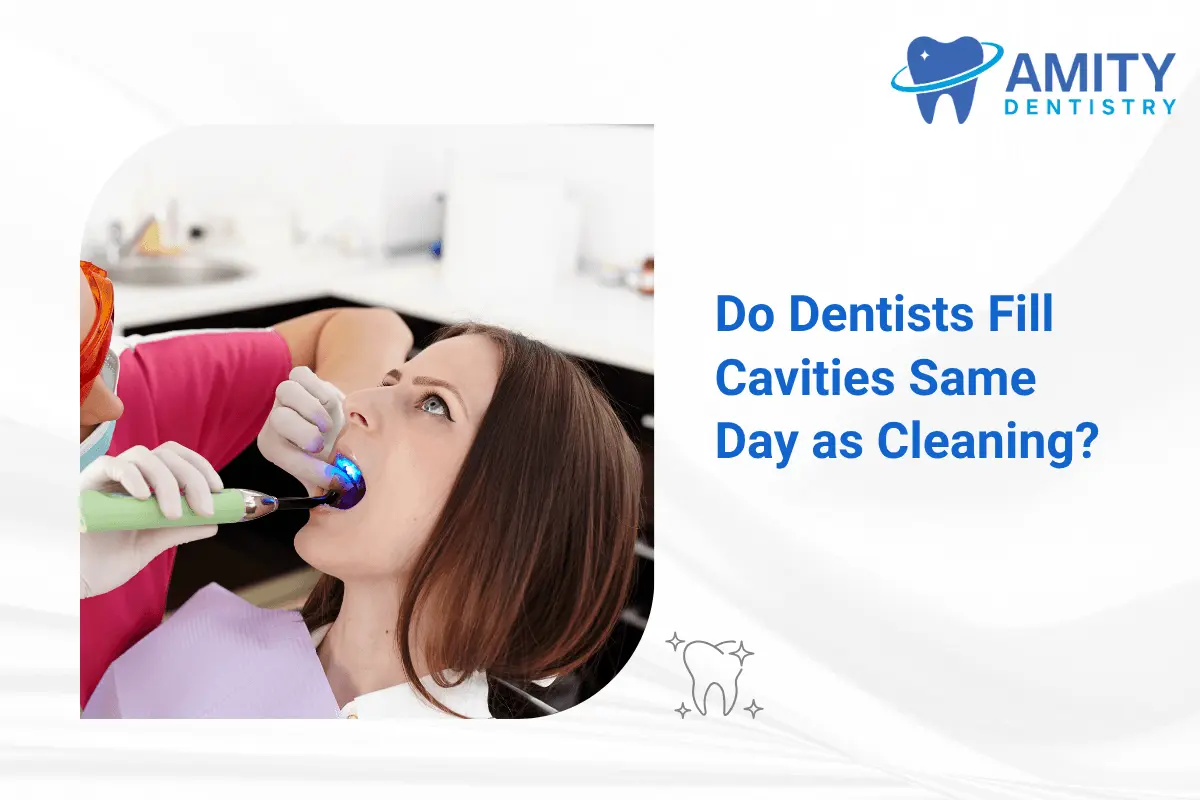
- Curing the filling. For composite fillings, a special light hardens the material in seconds.
- Checking your bite. The dentist asks you to bite down on a strip of paper to check the filling doesn’t sit too high.
The whole process for one or two fillings usually takes between 20 and 60 minutes, depending on the size and location of the cavity.
Can You Brush Your Teeth After Getting a Filling?
Yes, but timing matters. You can brush your teeth after getting a filling, though it’s a good idea to wait a few hours, especially if you’re still numb.
Here’s why:
- Numbness makes it hard to tell how much pressure you’re using. Brushing too hard on numb gums or a numb tongue can cause irritation without you realizing it.
- Composite fillings need time to fully set. Even though the curing light hardens the surface right away, giving it a few hours before brushing helps avoid disturbing the material.
- Amalgam fillings take longer to harden fully, sometimes up to 24 hours, so being gentle around that tooth for a day is a good idea.
For the rest of that day, brush gently and avoid scrubbing directly over the new filling. Regular brushing can resume the next day without any issues.
What to Do After Getting a Same Day Cavity Filling
Once your filling is done, a little aftercare goes a long way in avoiding discomfort and helping the filling last.
- Wait until the numbness wears off before eating. This usually takes one to three hours. Eating while numb can lead to accidentally biting your cheek or tongue.
- Stick to soft foods for the first few hours. Things like yogurt, mashed potatoes, or soup are easier on a freshly filled tooth.
- Avoid very hot or very cold foods and drinks for a day or two. Teeth can be sensitive to temperature right after a filling.
- Skip anything hard, sticky, or chewy on that side of your mouth for a day. This includes caramel, nuts, or ice.
- Take over-the-counter pain relief if needed. Mild soreness or sensitivity is normal and usually goes away within a day or two.
- Floss carefully around the new filling. Wait until the next day if the area feels sensitive.
Recovery After Cavity Filling: What to Expect Same Day
Most people go about their day normally right after getting a filling. There’s no real downtime required. Still, here’s what’s typical in the hours and days after:
- Numbness lasts a few hours. Depending on the strength of the anesthetic, feeling returns to your lips, cheeks, and tongue within one to four hours.
- Mild sensitivity is common. Your tooth might feel sensitive to hot, cold, or pressure for a few days, especially if the cavity was deep.
- Bite adjustment. If your bite feels slightly off after the numbness wears off, call your dentist. Small adjustments are quick and simple to fix.
- Full comfort within a week. Most sensitivity fades within a week. If pain increases or doesn’t go away, it’s worth getting it checked.
For the vast majority of patients, a same-day filling means walking out of the office with the problem already solved and no real recovery period to worry about.
Book Your Dental Cleaning and Cavity Treatment at Amity Dentistry
Whether it’s time for your routine dental cleaning or you’ve noticed signs of a cavity, the team at our dentistry is here to help. Our comprehensive exams allow us to detect tooth decay early, and when appropriate, we can often complete your cavity filling during the same visit, saving you time while protecting your oral health.
Schedule your appointment with Amity Dentistry today and keep your smile healthy with preventive care and prompt, comfortable treatment.