Short answer: You may be able to whiten natural teeth when you have fillings or crowns, but whitening will not lighten those restorations. A shade difference can become more noticeable. Have your dentist assess your teeth and existing dental work before choosing a whitening product or planning new restorations. [1]
You’d like a brighter smile, but you already have a crown or a tooth-colored filling. The detail to know before whitening is that natural teeth and dental restorations respond differently. Whitening can lighten natural teeth, while crowns, veneers, and fillings won’t lighten in the same way. Dental work that blends in now may stand out afterward. ADA whitening guidance
That doesn’t automatically rule out whitening. It means the dental work you already have should be part of the discussion before you choose a product or a shade.
Why fillings and crowns can look different after whitening
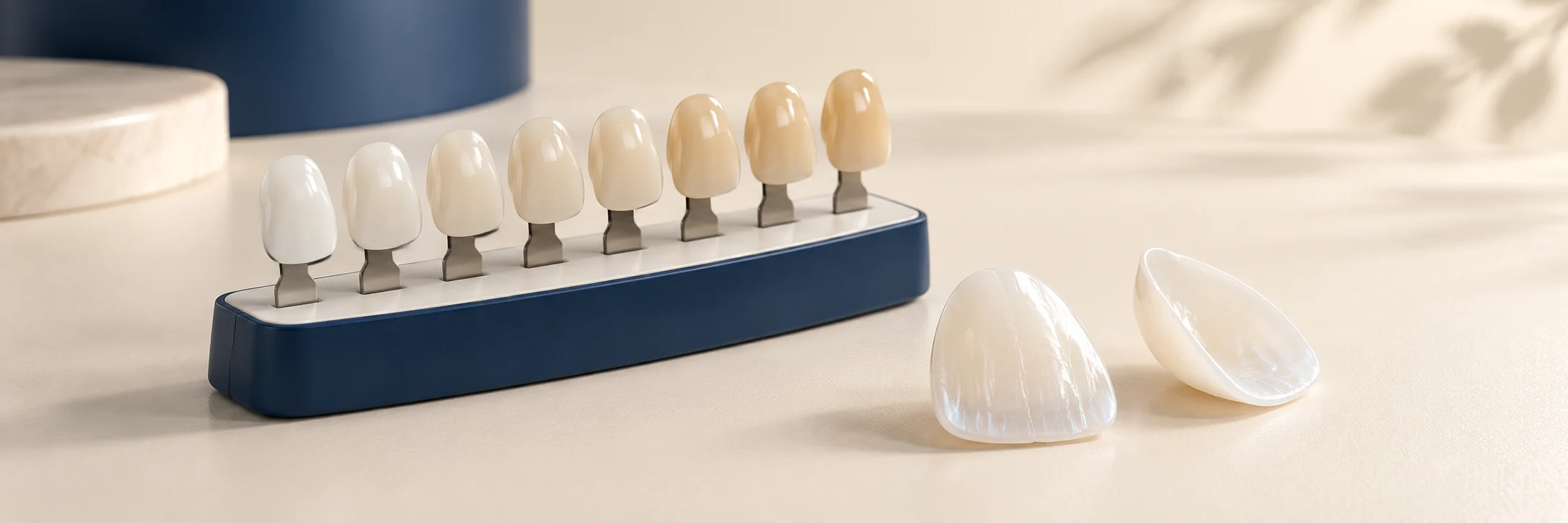
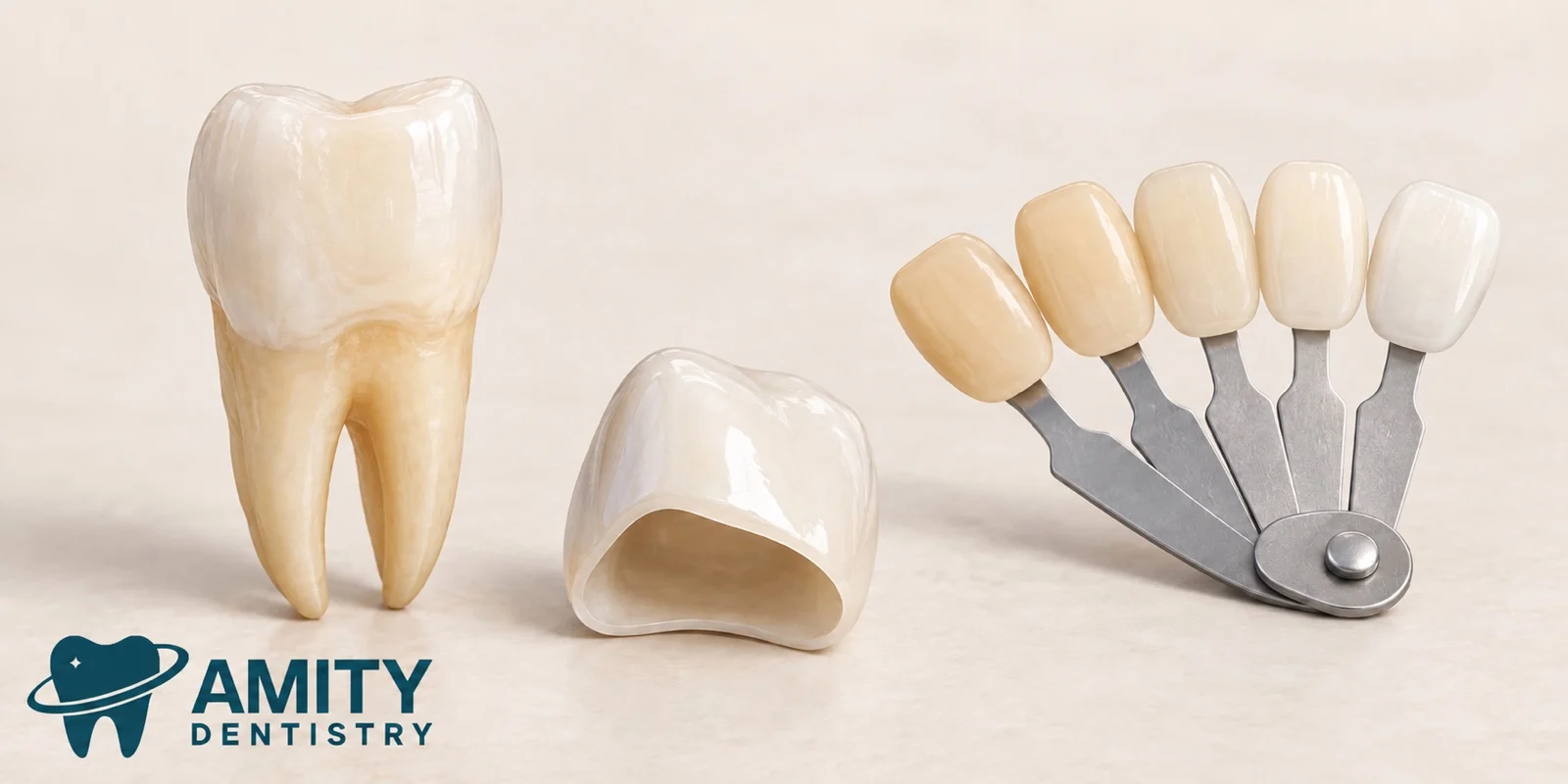
Picture a front crown that matches the teeth beside it. If those teeth become lighter, the crown may start to look darker. The crown itself hasn’t necessarily changed; you’re seeing it against a different background.
A filling farther back in your mouth may matter less to you if it rarely shows. Where the dental work sits, and how you feel about it, can change what you want from treatment.
Point out the teeth that catch your attention. You can even bring a photo of your own smile to explain what you notice. A concern that shows up in a close-up picture may feel different from one you see every time you look in the mirror.
Find out what is causing the color change
Teeth become discolored for different reasons, and whitening won’t have the same effect on every kind of stain. The American Dental Association recommends talking with a dentist about the cause and likely response before you start. ADA patient guide to teeth whitening
Tell your dentist if your teeth are sensitive, what you’ve tried before, and which whitening products you’re using now. An examination can help guide the choice of treatment. Whitening can cause sensitivity and gum irritation, so mention any history of either, even if it happened with a product you bought over the counter. ADA clinical overview
Plan whitening and new dental work in the right order
If you’re thinking about both whitening and new cosmetic dental work, pause before picking the shade for a new restoration. Ask when the whitening result should be assessed and how that affects the next step. Your dentist should set the timing for your treatment.
A few questions can make that conversation easier:
- Which visible teeth are natural, and which have restorations?
- How much color difference might become noticeable?
- Can the plan work with the restorations I already have?
- If a replacement is proposed, is it needed for dental health, appearance, or both?
- What would each option cost, including any later adjustments?
These details help you understand the full plan and its cost. They also give you a chance to say how much change you actually want. A small improvement may be enough.
Explain what a brighter smile means to you
“Whiter” doesn’t mean the same thing to everyone. You might want to soften visible staining while keeping a familiar shade. Or you may be hoping for a more noticeable change across the teeth that show when you smile.
Say which result you have in mind, then ask what’s realistic with your natural teeth and existing dental work. If a wedding, family photo, or another event is part of the reason you’re considering whitening, mention the date at the first visit.
You can read more in the ADA’s guide to teeth whitening. If tooth shape is also on your mind, our bonding and veneers comparison covers those options.
Take the next step at Amity Dentistry
Bring your whitening questions and concerns about existing dental work to Amity Dentistry in Charlotte, near Pineville. Our cosmetic dentistry page is a useful place to explore the services available.
Request an appointment or call (980) 423-1244. An examination can help you understand what may work for your smile before you commit to a change.
Frequently asked questions
Will whitening strips whiten my crowns or fillings?
No. Bleaching products can change natural tooth color, but they do not lighten crowns or tooth-colored fillings to match. [1]
Can I still whiten if I have a crown on a front tooth?
Possibly, after an assessment. The main planning issue is how a lighter natural tooth shade would look beside the crown. [1]
Do I have to replace my crown after whitening?
Replacement is not automatic. Ask whether the existing restoration can stay and whether any proposed change is for appearance, dental health, or both.
Should I whiten before getting a new filling or crown?
Tell your dentist about both plans before a shade is selected. The appropriate order and timing depend on the care you need.
Can whitening cause sensitive teeth?
Yes. Temporary sensitivity and gum irritation are common side effects. Discuss previous sensitivity and follow the product and dentist’s instructions. [1]
Related reading from Amity Dentistry
- Dental Bonding vs. Porcelain Veneers — Compare ways to change tooth appearance when shape is part of your concern.
- How Often Should I Visit the Dentist? — Plan the examination and ongoing care around your whitening questions.
- How to Find the Right Dentist for Dental Anxiety — Learn how to raise worries about sensitivity or dental appointments.
This guide provides general information. A dental examination is needed to recommend treatment for your teeth.