AT A GLANCE: Dental Fillings in Charlotte/Pineville, NC
| Primary Use | Restores tooth structure damaged by dental caries (cavities) |
| Best Materials | Composite resin (natural look) or porcelain/ceramic inlays |
| Procedure Time | Usually 30 to 60 minutes per tooth |
| Local Availability | Amity Dentistry provides same-day composite fillings in Pineville for both emergency and routine care |
| Location | 7221 Pineville-Matthews Rd, Ste 100, Charlotte, NC 28226 |
Ever felt that sudden pain when you sip something cold or bite into your favorite sweet treat? That painful sensation often hints at a cavity, a tiny but troublesome hole in your tooth.
For this, fillings are the perfect solution. While the thought of a “filling” might sound scary, it’s one of the most common and effective ways dentists help you keep your smile healthy and pain-free. Dental professionals are ready to address these issues, stopping decay in its tracks and restoring your tooth’s strength.
What Are Cavity Fillings?
Cavity fillings, also known as dental fillings, are a restorative dentistry treatment used to repair a tooth that has been damaged by decay. When a cavity forms, it creates a small hole or weakened area in the tooth.
If left untreated, the decay can spread and cause pain, infection, or even tooth loss. To stop this process, a dentist removes the decayed portion of the tooth and fills the space with a special material, known as a filling. This helps restore the tooth’s strength, shape, and function.
The clinical term for this process is a “dental restoration” for “dental caries,” but no matter what you call it, the goal is the same: stop decay from spreading, restore the tooth’s original shape and strength, and seal off the area so bacteria cannot re-enter.
When a cavity forms, the damaged tooth structure cannot heal on its own. A dentist removes the decayed portion and fills the space with a durable material like composite resin, porcelain, or amalgam. These materials helps to bring the tooth back to full function. When a cavity forms, the damaged tooth structure cannot heal on its own. At Amity Dentistry in Pineville, Charlotte, fillings are one of the most common procedures we perform as part of our restorative dentistry services, and the process is typically completed in a single visit., and the process is typically completed in a single visit.
Types of Dental Fillings Available in North Carolina
When it comes to dental fillings in North Carolina, you have several choices, each with its benefits. Your dentist in North Carolina will discuss which option is best for you based on the cavity’s size, its location in your mouth, your budget, and your personal preferences.
1. Composite Resin Fillings (Tooth-Colored Fillings)
These are the most popular dental fillings options in North Carolina because they match the natural color of your teeth. Made from a mixture of fine glass particles and plastic, composite fillings bond directly to your tooth, requiring less removal of healthy tooth structure. They are great for visible teeth and can last typically 5-10 years or more with good care.
2. Amalgam Fillings (Silver Fillings)
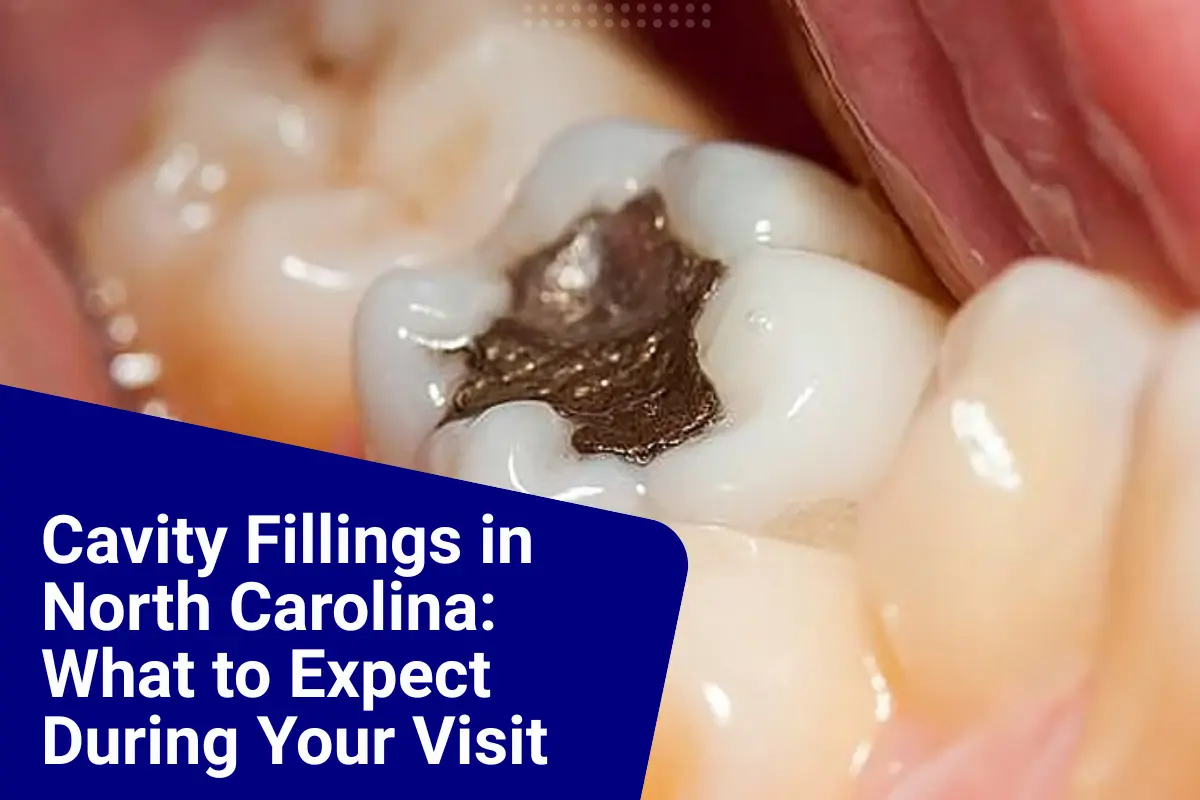
These are a strong and cost-effective option, made from a blend of metals including mercury, silver, tin, and copper. Amalgam fillings are very durable and can last 10-15 years or even longer, especially in back teeth where chewing forces are strong. However, their silver color is noticeable.
3. Porcelain (Ceramic) Fillings / Inlays & Onlays
These fillings are also tooth-colored and made from porcelain. They are custom made in a lab to fit your tooth perfectly. Porcelain fillings are highly aesthetic and stain-resistant, lasting around 10-15 years. They are generally more expensive than composite or amalgam fillings and may require more than one visit.
The “Natural” Dental Fillings Choice: Composite Resin vs. Porcelain Fillings
Modern tooth cavity filling technology is built around two priorities: aesthetics and durability. Gone are the days when silver amalgam was your only choice. Patients in the Charlotte-Pineville area now have access to tooth-colored materials that are virtually invisible and engineered to last.
1. Composite Resin Fillings (Tooth-Colored)
Composite fillings are the most popular natural cavity filling option available today. Made from a blend of fine glass particles and plastic resin, composite bonds directly to your existing tooth structure. The shade is custom-matched to your enamel, making it the go-to choice for visible teeth. Composite also requires less removal of healthy tooth material compared to traditional amalgam, which means more of your natural tooth is preserved. With proper care, composite fillings last approximately 5 to 10 years or more. Our restorative dentistry team at Amity Dentistry applies composite in precise layers and cures each one with a specialized light for a tight, durable bond.
2. Porcelain Inlays and Onlays
For larger cavities where extra strength is needed beyond what a standard composite filling can provide, porcelain inlays and onlays are the preferred solution. These are custom-fabricated in a dental lab to fit your tooth exactly. Porcelain is highly stain-resistant, remarkably natural in appearance, and durable enough to handle the pressure of back teeth where chewing forces are greatest. They typically last 10 to 15 years.
Why Pineville Patients Choose Composite Over Amalgam?
Beyond the “invisible” appearance, composite fillings for cavities require the removal of significantly less healthy tooth structure than older silver (amalgam) alternatives. Composite also creates a chemical bond with the tooth rather than simply being packed into the cavity, resulting in a better seal against future bacterial intrusion. For patients concerned about mercury content in amalgam, composite resin is entirely metal-free, however, a dentist visit can solve such dilemmas and guide best treatments according to the cavity condition.
Whether you need a small natural cavity filling or a larger porcelain inlay, Amity Dentistry will recommend the option that best preserves your tooth structure and fits your needs.
When Does One Need a Cavity Filling?
You typically need a dental filling when a part of your tooth has been damaged or lost. The most common reason for this is a cavity, which is a hole in your tooth caused by decay. However, fillings can also be used to repair teeth that are cracked, chipped, or worn down from grinding or aggressive brushing.
Here are the common signs that might indicate you need a dental filling:
- Toothache or Persistent Pain
- Sensitivity
- Visible Holes or Pits
- Food Getting Stuck
- Broken or Chipped Tooth
- Cavities
What to Expect During Your Cavity Filling Visit at a Dentist?
Getting a cavity filled is a common and usually comfortable procedure. Here’s a simple breakdown of what will happen during your visit to a dental office, step-by-step:
Step 1: Tooth Examination
The first thing your dentist will do is carefully look at the tooth that’s causing you trouble. The dentist will thoroughly examine your tooth to understand the issue. They might use small dental tools to check the surface of your tooth, and they will take an X-ray if needed.
Step 2: X-Ray and Choice of Material
After the initial check, your dentist will take an X-ray of the affected tooth. This X-ray helps them see how deep the decay goes. If the infection has reached the very center of the tooth (called the pulp), a different procedure called Root Canal Therapy might be needed.
However, if the infection hasn’t reached the pulp, a dental filling will work perfectly. At this point, your dentist will discuss the best filling material for you and help you choose the one that suits your needs and budget.
Step 3: Numbing and Decay Removal
To make sure you’re comfortable and feel no pain, your dentist will numb the area around the tooth. This is usually done with a quick injection. Once the area is numb, they will carefully remove the decayed part of your tooth. This is typically done using a small, high-speed dental drill with special tools called burs, or sometimes a spoon-shaped tool called a spoon excavator.
Step 4: Filling Using Restorative Material
After all the decay is removed and the tooth is clean, your dentist will begin inserting the chosen filling material into the prepared space. Common filling materials include Glass Ionomer Cement (GIC), composite resin, amalgam, gold, and porcelain.
For custom-made porcelain fillings (called inlays or onlays), your dentist might need to take an impression of your tooth. This impression is then sent to a dental lab where the porcelain filling is crafted to fit your tooth perfectly.
Process on How Do Cavities Get Filled
If you have been putting off a tooth filling appointment because you are nervous about the procedure, here is exactly what happens during a cavity dental filling visit at Amity Dentistry in Charlotte/Pineville, NC:
1. Clinical Assessment and Digital X-Ray
Your dentist begins with a thorough examination of the affected tooth using dental instruments and digital X-rays. The X-ray maps how deep the decay extends. If decay has reached the pulp at the center of the tooth, a different procedureis needed. Root Canal Therapy may be required to address the extend of decay to the pulp. Amity Dentistry also provides Root Canal Treatment when needed, so your full care is handled in one location. If the decay has not reached the pulp, a standard tooth filling is the right path forward.
2. Numbing and Decay Removal
The area around the tooth is numbed with a local anesthetic so you feel no pain. There is only mild pressure felt at most which is briefed to the patient by the dentist. Once the area is numb, your dentist carefully removes all decayed material using precise dental instruments. Nothing healthy is taken; only the damaged portion is cleared away.
3. The Fill
The clean cavity is filled with the chosen restorative material. Materials like composite resin, porcelain inlay, or another option determined during a patients’ consultation. For composite fillings, the material is applied in layers to build up the correct shape and strength within the tooth.
4. Curing
A specialized curing light is directed at the composite filling to harden each layer instantly. This light-activated process creates a strong bond between the material and the tooth structure, ensuring the filling is solid before any polishing begins.
Step 5: Bite Adjustment
Once the filling has hardened, your dentist in charlotte will check your bite to make sure the new filling isn’t too high or uncomfortable. They will place a thin piece of colored paper (often called articulating paper) in your mouth and ask you to bite down.
The paper leaves marks on any “high spots” on the filling. Your dentist will then gently remove these high spots, making small adjustments until your bite feels completely natural and comfortable. These adjustments are crucial so the filling doesn’t interfere with your daily activities like biting and chewing.
Step 6: Polishing and Finishing
The final step is to polish and finish your new filling. Your dentist will use specialized polishing tools to make the filling smooth and glossy, just like the rest of your natural tooth. This quick and painless step leaves you with a beautifully restored tooth that looks and feels great!
For patients experiencing sudden tooth pain or a broken filling, Amity Dentistry also offers emergency dental care with same-day appointments available for urgent cavity and filling needs.
Aftercare Tips for a Cavity Filling
Once your filling is in place, a little care can go a long way in making it last. Here are some aftercare tips for a cavity filling you can try:
- Be Gentle with Chewing: For the first few hours after your filling, especially if you’ve had a metal (amalgam) filling, avoid chewing on the treated side. It’s best to let the filling fully set.
- Watch for Sensitivity: It’s normal to feel some sensitivity to hot, cold, or pressure for a few days after a filling. This usually goes away on its own.
- Maintain Good Oral Hygiene: Continue brushing and flossing regularly. Use a soft-bristled toothbrush and be gentle around the filled tooth.
- Avoid Sticky and Hard Foods: For a short time, try to avoid very sticky candies, tough meats, or hard nuts on the filled tooth, especially if it’s still sensitive.
- Limit Sugary and Acidic Drinks: Sugary sodas, fruit juices, and acidic foods can be harsh on your teeth and fillings. Limiting these can help prolong the life of your filling and prevent future decay.
- Rinse Gently with Saltwater: A warm saltwater rinse can help keep the area clean and soothe any minor irritation. This is especially helpful on the first days after your procedure.
Local Oral Health Insight: Dental Decay in North Carolina
Keeping up with your cavity filling schedule is not just about comfort. It is a meaningful investment in your long-term health. According to 2024 data from the North Carolina Department of Health and Human Services (NCDHHS), dental decay remains the most common chronic disease in the state, with nearly 1 in 5 North Carolina children having untreated tooth decay in the most recent reporting cycle.
In the Charlotte-Pineville area, access to timely care is critical. The NCDHHS Oral Health Section consistently emphasizes that early intervention with simple cavity fillings prevents the need for far more expensive and involved procedures later. A filling that costs a fraction of the price today can prevent the need for a dental implant or surgical extraction down the line.
Amity Dentistry supports this preventive-first philosophy across all age groups. Our preventive dentistry services including exams, cleanings, and fluoride treatments are designed to catch decay at its earliest stage before a filling even becomes necessary. For families with children, our pediatric dentistry team provides age-appropriate cavity screening and treatment in a comfortable, low-anxiety environment.
Official Data Source: (February 2024), NCDHHS Oral Health Section.
How Much Do Cavity Fillings Cost in North Carolina?
The cost of a cavity filling in North Carolina depends on a few factors, including the type of material used, how many teeth need to be filled, and the clinic you visit. In general, composite (tooth-colored) fillings tend to cost more than amalgam (silver) fillings, but the natural appearance may be worth it for many patients.
Factors Affecting Cavity Fillings Cost
Here are some factors that affect the overall cost of cavity fillings:
- Type of filling material
- Number and size of cavities
- Location of the tooth (front or back)
- Insurance coverage
Conclusion: Get Cavity Fillings in North Carolina
Cavity fillings are a simple but important part of keeping your teeth strong and healthy. Whether you’re choosing between different filling types or wondering about the cost, knowing what to expect makes the experience smoother.
If you’re in North Carolina (especially dentist near Pineville), visit Amity Dentistry, where you’ll find high-quality, affordable dental services that can help you restore your smile with confidence. Don’t wait for a small cavity to become a big problem. Looking for a trusted dentist in Charlotte? Schedule your consultation at 980-423-1244 and Book Now today.